The Reading Crisis Hiding in International Schools: Why Smart Kids Can't Decode (And How Phonics Fixes It Fast)
The Painful Homework Moment Every Parent Recognizes
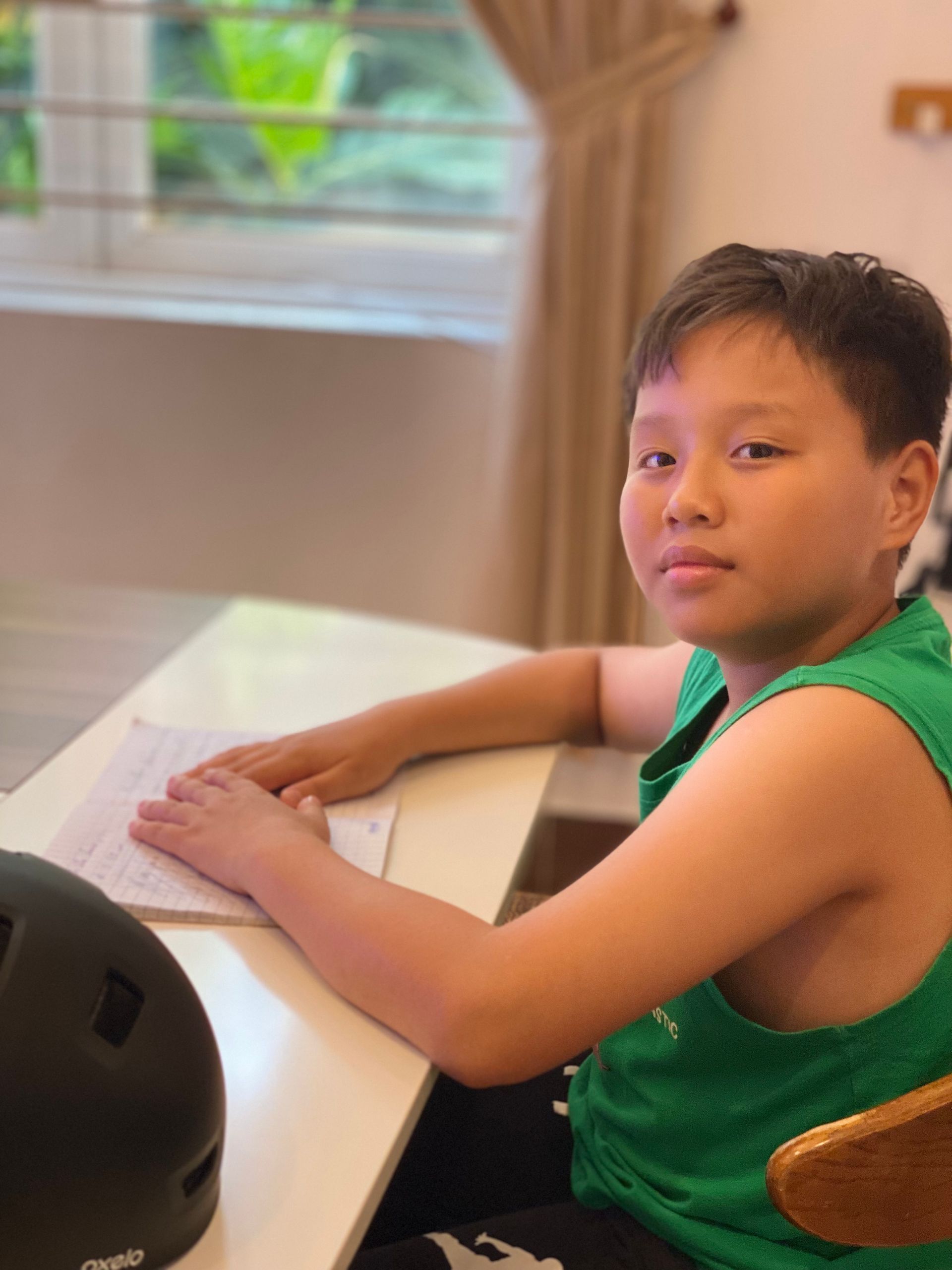
It's 7 PM. Your bright, articulate child sits at the dining table staring at a Grade 3 reading passage. They recognize some words instantly. Others they try to sound out, but the process is slow, painful, and often wrong. After struggling through a paragraph, you ask what they just read. Blank stare. They were so focused on decoding individual words that meaning evaporated.
This scene repeats in international school households across Thao Dien and greater HCMC every single night. Parents wonder: How can my child attend an English-immersion school but still can't read fluently?
At Spark English Center Vietnam, we know the answer. And more importantly, we know the research-proven solution.
The Phonics Gap That Schools Don't Fix
Here's what most parents don't realize: many international schools assume students arrive with phonics mastery. Elementary curricula often move quickly into literature, writing, and content subjects, providing minimal systematic phonics instruction.
For native English speakers who learned to read in English-speaking preschools or kindergartens, this works fine. But for Korean, Japanese, and Vietnamese children learning English as an additional language, critical foundational skills often get skipped.
What Is Phonics and Why Does It Matter?
Phonics is the relationship between letters (graphemes) and sounds (phonemes). Effective reading requires:
- Decoding ability: breaking words into sound units and blending them fluently
- Automaticity: recognizing common patterns instantly without conscious effort
- Fluency: reading connected text quickly and accurately
- Comprehension: understanding meaning while reading
Without strong phonics and decoding skills, everything else collapses. A child might have excellent vocabulary, strong oral language, and high intelligence—but if they can't automatically decode words on the page, reading becomes exhausting and comprehension suffers.
The Warning Signs Your Child Has Phonics Gaps
Parents often miss these signs because children develop clever compensating strategies:
Sign 1: Sight-Word Dependence Your child recognizes hundreds of memorized words but freezes when encountering unfamiliar words. They guess based on context or first letters rather than sounding out the whole word.
Sign 2: Slow, Choppy Reading Reading lacks flow. Frequent pausing, backtracking, and self-correction. Oral reading sounds robotic rather than natural.
Sign 3: Poor Spelling Spelling doesn't match what they can read. They write phonetically incorrect versions (e.g., "becuz" for "because") because they've memorized word shapes rather than learned sound-spelling patterns.
Sign 4: Avoidance Behavior Reluctance to read aloud, complaints of tiredness or headaches during reading, preference for audiobooks or videos over text.
Sign 5: Comprehension Disconnect Can answer questions about stories read to them but can't comprehend the same material when reading independently. This reveals that decoding effort is exhausting their cognitive capacity.
Sign 6: Multisyllabic Struggles Handles short words fine but struggles with longer words (three or more syllables). Can't break words into chunks systematically.
How Phonics Gaps Develop in International School Students
Limited Systematic Instruction Many international schools use "balanced literacy" approaches that emphasize meaning-making and authentic texts over systematic phonics. Students learn sight words and reading strategies but miss explicit instruction in decoding patterns.
Fast Curriculum Pacing Schools move quickly to cover grade-level standards. Students who miss early phonics concepts don't get remediation—they're expected to catch up independently.
Large Class Sizes With 20-25 students, teachers can't provide enough individual decoding practice and corrective feedback. Students develop habits of guessing rather than accurate decoding.
L1 Interference Korean, Japanese, and Vietnamese have different phonological systems than English. Sounds, syllable structures, and orthographic rules don't transfer directly, requiring explicit instruction that many schools don't provide.
Late English Start Students who begin English instruction in elementary school rather than early childhood miss critical phonemic awareness development windows.
The Science-Backed Solution: Systematic Phonics Intervention
Decades of reading research—including studies from the National Reading Panel and more recent systematic reviews—consistently show that explicit, systematic phonics instruction produces significant reading gains, especially for struggling readers and English language learners.
At Spark English Center Vietnam, our phonics remediation programs follow this evidence-based sequence:
Phase 1: Phonemic Awareness Foundation (Weeks 1-2)
- Sound isolation, blending, and segmentation exercises
- Oral activities building sound manipulation skills
- Multisensory reinforcement (visual, auditory, kinesthetic)
Phase 2: Basic Phonics Patterns (Weeks 2-4)
- Short vowels and consonant sounds
- CVC (consonant-vowel-consonant) words
- Common consonant blends and digraphs
- Daily practice with decodable readers
Phase 3: Advanced Phonics Patterns (Weeks 4-6)
- Long vowels and vowel teams
- R-controlled vowels
- Common spelling patterns and word families
- Increasing text complexity
Phase 4: Multisyllabic Decoding (Weeks 6-8)
- Syllable types and division rules
- Prefixes, suffixes, and root words
- Accent and stress patterns
- Connected text fluency building
Phase 5: Fluency Acceleration (Weeks 8-12)
- Timed repeated readings
- Prosody and expression practice
- Transition to grade-level texts
- Comprehension integration
The Small-Group Advantage at Spark English Center Vietnam
Why Small Groups Trump Large Classes
Research shows learning efficiency increases dramatically when group size decreases. Here's why our 4-6 student groups produce rapid gains:
Higher Feedback Density In a 45-minute lesson with 4 students, each child receives 20+ corrective feedback moments. In a class of 25, they might receive 2-3. Feedback density is the strongest predictor of skill acquisition speed.
More Practice Opportunities Small groups mean more turns, more oral reading, more active participation. Students aren't passively watching others—they're constantly engaged.
Peer Learning Benefits Students hear peers' attempts, learn from mistakes, and benefit from collaborative correction. The group is small enough that every error becomes a teaching moment.
Targeted Instruction Groups are formed by skill level and learning need. A child weak in vowel teams joins others with the same gap, receiving instruction perfectly matched to their needs.
Confidence Building Students feel safer taking risks in small groups. They're more willing to attempt challenging words and self-correct without fear of embarrassment in front of 25 peers.
The Daily Practice Secret
Here's a truth about skill acquisition that makes many parents uncomfortable: short, frequent practice beats long, infrequent study.
The 10-Minute Daily Practice Protocol
At Spark English Center Vietnam, we teach parents a simple 10-15 minute nightly routine:
Minutes 1-3: Sound Warmup Review current phonics patterns using flashcards or quick oral drills. Fast-paced, energetic, playful.
Minutes 4-9: Decodable Reading Child reads a short passage (100-200 words) aligned with current phonics focus. Parent marks errors but doesn't interrupt. Child rereads the same passage for accuracy and speed.
Minutes 10-12: Word Building Use letter tiles or write to build 5-10 words using target patterns. Child reads each word and uses it in a sentence.
Minutes 13-15: Oral Summary Child tells what they read in their own words. Builds comprehension connection and oral language simultaneously.
This simple routine, done consistently, produces more gains than hours of sporadic homework help.
Real Results: Before and After Stories
Case Study: Grade 4 Japanese Student
Starting Point:
- Reading fluency: 52 WPM (grade target: 110-120 WPM)
- Phonics assessment: Weak on vowel teams and multisyllabic decoding
- Comprehension: 45% on grade-level passages
- Confidence: Very low, avoided all voluntary reading
Intervention (12 weeks):
- Small-group phonics instruction 3x/week at Spark English Center Vietnam
- Daily home practice with decodable texts
- Weekly fluency monitoring
- Parent coaching on effective practice routines
Outcomes:
- Reading fluency improved to 95 WPM (+43 WPM gain)
- Phonics assessment: Mastered all vowel patterns, strong multisyllabic decoding
- Comprehension improved to 78% on grade-level passages
- Confidence transformed: voluntarily read first chapter book
Case Study: Grade 2 Vietnamese Student
Starting Point:
- Could recognize many sight words but guessed on unfamiliar words
- Reading fluency: 28 WPM (grade target: 70-80 WPM)
- Spelling was inconsistent and phonetically incorrect
Intervention (8 weeks):
- Intensive basic phonics remediation at Spark English Center Vietnam
- Letter-sound correspondence mastery
- CVC and CCVC word patterns
- Daily 10-minute home practice
Outcomes:
- Reading fluency improved to 68 WPM (+40 WPM gain)
- Now decodes unfamiliar words successfully
- Spelling dramatically improved as understanding of sound-letter connections strengthened
- Reading confidence soared
Common Parent Questions About Phonics Programs
Q: Isn't my child too old for phonics? They're already in Grade 3/4/5.
A: It's never too late to fill phonics gaps. Older students actually progress faster because they have stronger cognitive skills and motivation. We've successfully remediated phonics with students through middle school.
Q: How do I know if my child needs phonics or if it's a different issue?
A: Our free diagnostic assessment pinpoints exactly which skills are weak. Book an assessment and we'll tell you whether phonics remediation is the right focus.
Q: Will phonics instruction interfere with what they're learning at international school?
A: No—it supports it. As decoding improves, school reading assignments become easier. We coordinate with school curricula to ensure alignment.
Q: How long until we see results?
A: Most families notice increased reading confidence within 2-3 weeks. Measurable fluency gains appear within 6-8 weeks. Sustained mastery develops over 3-6 months.
Q: What if my child resists phonics practice because it feels "babyish"?
A: We use age-appropriate materials and frame phonics as "code-cracking" or "reading science." Older students appreciate seeing measurable progress (fluency graphs, WPM gains) which motivates continued effort.
Why Spark English Center Vietnam's Phonics Program Stands Out
Evidence-Based Curriculum We use structured literacy approaches validated by reading science, not trendy or unproven methods.
Highly Trained Instructors Our teachers receive ongoing professional development in phonics instruction, error correction techniques, and fluency building strategies.
Small Group Instruction Maximum 6 students per group ensures high feedback density and individualized attention.
Progress Monitoring Weekly fluency assessments track improvement. Monthly reports show measurable gains and adjust instruction as needed.
Home-School Connection Parent coaching ensures daily practice routines are effective. We provide materials, demonstration videos, and ongoing support.
Thao Dien Convenience After-school timing fits international school schedules. Location minimizes travel time for busy families.
Cultural Understanding We specialize in Korean, Japanese, and Vietnamese learners, understanding specific L1 challenges and family expectations.
Take Action Now
Phonics gaps don't fix themselves. Every month of delay means more frustration, lower confidence, and widening achievement gaps. But targeted intervention produces rapid, measurable results.
If your international school student struggles with reading, the first step is simple: discover exactly which phonics skills are missing.
Book your free diagnostic assessment: https://www.sparkvn.com/Assessment
Spark English Center Vietnam Location: Thao Dien, Ho Chi Minh City Specialization: Phonics remediation, reading fluency, and literacy development for international school students Serving: Korean, Japanese, Vietnamese, and international families throughout HCMC
Let's turn reading struggles into reading success—starting this week.