The Class Size Secret: Why 4-6 Students Produces 10X Better Results Than One-on-One Tutoring or School Classes
The Goldilocks Principle of Language Learning
When international school parents in HCMC seek extra English support, they typically choose one of two paths:
Path 1: Private One-on-One Tutoring Expensive. Flexible scheduling. Complete teacher attention. Seems ideal on paper.
Path 2: Large Group Classes or School Lower cost per student. Less individual attention. Limited speaking time. Slower progress.
But research and our experience at Spark English Center Vietnam reveal a surprising truth: neither extreme is optimal for most learners.
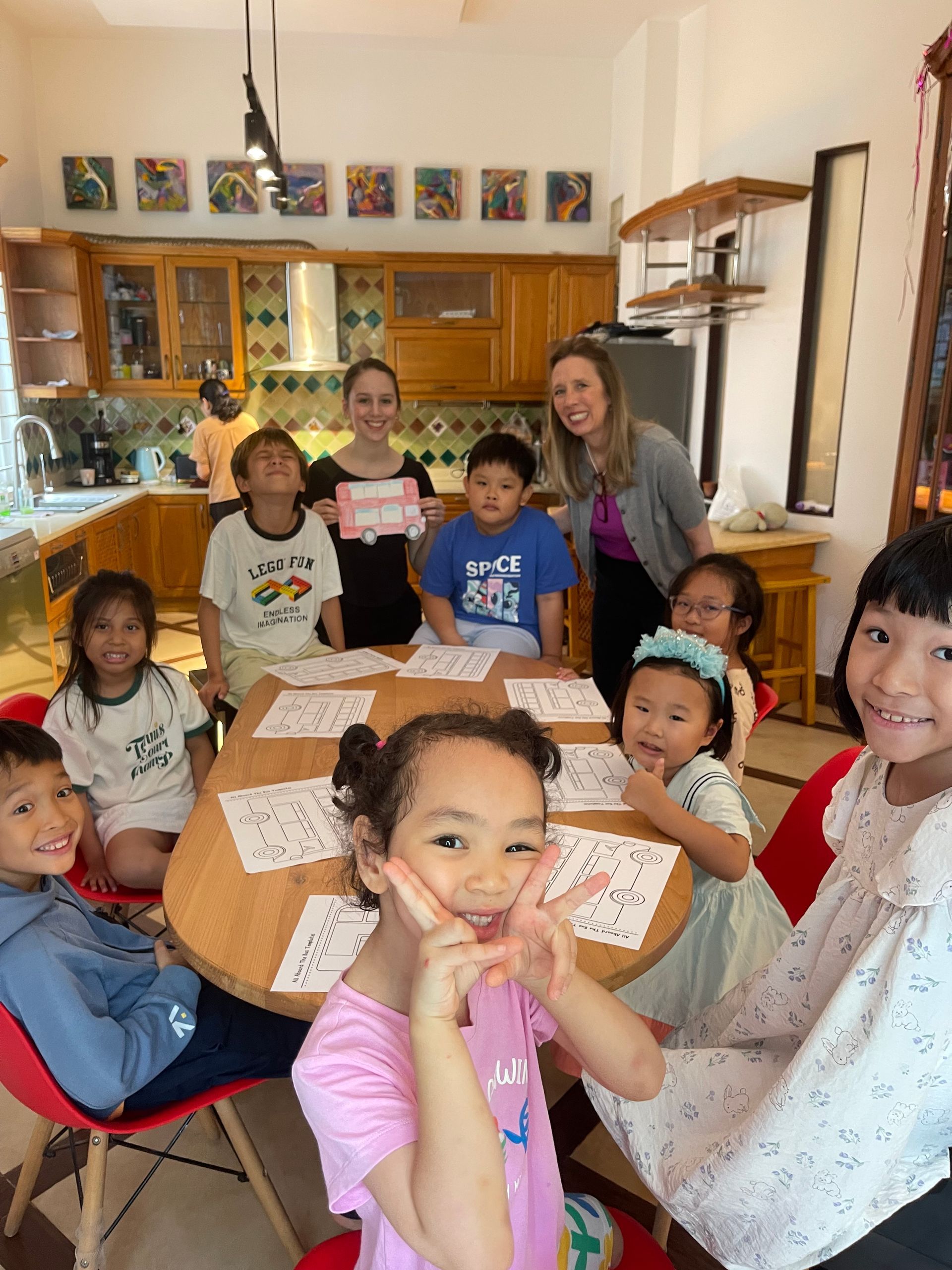
The sweet spot—the "just right" learning environment—is the small group of 4-6 students. This configuration produces faster skill gains, better engagement, higher motivation, and more cost-effective results than either one-on-one or large group instruction.
Let me explain why, backed by evidence and real classroom data from our Thao Dien center.
The Hidden Problems with One-on-One Tutoring
Parents invest in private tutors assuming maximum attention equals maximum learning. But one-on-one instruction creates unexpected challenges:
Problem 1: Performance Pressure Constant spotlight creates anxiety. Students feel every mistake is magnified. Fear of disappointing the teacher or parent inhibits risk-taking and reduces natural language flow.
Problem 2: Limited Peer Learning Language is social. Students need exposure to multiple speakers, varied responses, and peer-to-peer interaction. One-on-one eliminates these learning opportunities.
Problem 3: Teacher Dependence Students rely heavily on teacher prompting and support rather than developing independence. They don't practice self-monitoring or peer correction.
Problem 4: Motivation Gaps Without peers, there's no collaborative energy, friendly competition, or shared achievement. Lessons can feel like isolated work sessions.
Problem 5: Artificial Communication Real communication involves turn-taking, listening while others speak, building on others' ideas. One-on-one lacks these authentic discourse patterns.
Problem 6: Cost Inefficiency Premium pricing makes sustained, frequent lessons financially challenging for many families.
The Well-Known Problems with Large Classes
International schools typically have 20-25 students per class. Everyone knows the limitations:
Problem 1: Minimal Individual Attention Each student might speak for 1-2 minutes in a 45-minute lesson. Feedback is scarce and often delayed.
Problem 2: Passive Learning Time Students spend most of class watching others, waiting for turns, or completing independent work with minimal teacher interaction.
Problem 3: Skill Range Challenges Wide ability ranges force teachers to aim for the middle, leaving struggling students behind and advanced students bored.
Problem 4: Behavior Management Teachers spend significant time managing 20+ students, reducing time for actual instruction.
Problem 5: Lost in the Crowd Quiet or shy students easily avoid participation. Teachers can't monitor every student's understanding continuously.
The Research Behind Small Groups (4-6 Students)
Educational research consistently identifies 4-6 students as the optimal group size for skill-based instruction, especially in language learning:
Research Finding 1: Feedback Density Studies show learning speed correlates strongly with corrective feedback frequency. Small groups provide 8-10x more feedback opportunities than large classes.
- Large class (25 students): 2-3 feedback moments per child per lesson
- Small group (5 students): 20-25 feedback moments per child per lesson
- One-on-one: High feedback but lacks peer learning benefits
Research Finding 2: Active Engagement Time Time-on-task research shows students in small groups spend 60-75% of lesson time actively engaged in speaking, reading, or writing. Large classes average 20-30% active engagement.
Research Finding 3: Peer Effects Learning accelerates when students observe peers attempting skills, making errors, and receiving correction. This "vicarious learning" doesn't happen one-on-one and is too diluted in large groups.
Research Finding 4: Motivation and Persistence Small group settings balance social energy with individual accountability, producing higher motivation and task persistence than either extreme.
Research Finding 5: Cost-Effectiveness Small groups deliver near-tutor-level results at a fraction of the cost, making intensive, frequent instruction affordable for more families.
How Spark English Center Vietnam's Small Groups Work
Group Formation: Precision Matching
We don't randomly assign students to groups. Each small group is carefully constructed based on:
- Skill Level: Diagnostic assessment data ensures students are within 6 months of each other developmentally
- Learning Goals: Students working on similar objectives (phonics remediation, fluency building, writing development) learn together
- Age and Grade: Grouping by age ensures appropriate social dynamics and topic relevance
- Language Background: When beneficial, we group students with similar L1 backgrounds to address common challenges
- Personality and Learning Style: We balance quiet and outgoing students, fast and reflective processors
Lesson Structure: Maximizing Every Minute
Our 45-minute small group lessons follow a high-intensity, high-feedback structure:
Minutes 1-5: Warmup Routine Fast-paced review of previous skills. Every student responds multiple times. Builds energy and activates prior knowledge.
Minutes 6-15: Explicit Instruction Teacher introduces new skill or concept with clear modeling. Immediate guided practice with individual feedback.
Minutes 16-30: Intensive Practice Rotation Students cycle through activities:
- Reading aloud (teacher listens to each student individually for 2-3 minutes)
- Partner practice (students practice with peer while teacher circulates)
- Independent application (short written task with immediate review)
Minutes 31-40: Collaborative Activity Group discussion, peer review, or collaborative problem-solving that requires everyone to contribute.
Minutes 41-45: Reflection and Goal-Setting Review lesson objectives. Set individual goals for homework. Celebrate specific achievements.
The Feedback Revolution
Here's what makes small groups transformative: in one 45-minute lesson at Spark English Center Vietnam, each student typically receives:
- 8-12 individual corrections during reading practice
- 4-6 grammar or pronunciation corrections during speaking activities
- 3-4 writing feedback moments
- 5-7 positive reinforcements of correct performance
Total: 20-29 feedback moments per lesson.
Compare this to a typical international school class where students might receive 2-3 feedback moments per week.
Real Classroom Example: A Spark English Center Vietnam Phonics Group
Group Profile:
- 5 students: Grades 3-4
- Shared challenge: Weak vowel team patterns (ai, ee, oa, igh, etc.)
- Mix of Korean, Japanese, and Vietnamese students
Lesson Snapshot: Week 3
Warmup (4 minutes): Teacher displays vowel team flashcards. Students take turns reading words. When Taro reads "bread" as "breed," teacher immediately corrects: "That vowel team 'ea' can say /e/ like in 'bread' or /ee/ like in 'read.' Watch my mouth: /brehd/." Taro repeats correctly. Class practices three more 'ea' words.
Explicit Teaching (10 minutes): Introduction of 'igh' pattern. Teacher models: "The letters igh work as a team to say /ī/ as in 'light.' Let's practice: light, night, fight, sight." Students echo-read. Teacher writes words on whiteboard, highlighting the pattern.
Intensive Practice Rotation (15 minutes):
Station 1 (with teacher): Each student reads a short decodable text containing multiple 'igh' words. Teacher marks errors, provides immediate correction, student rereads problematic words.
Station 2 (partner practice): Student pairs use word cards to build and read 'igh' words. Partners check each other.
Station 3 (independent): Students write five sentences using 'igh' words. Teacher will review during next rotation.
Collaborative Activity (12 minutes): Group game: Teacher says a word, students identify whether it contains an 'igh' pattern. When correct, they score a point. Friendly competition maintains energy.
Reflection (4 minutes): "Today you mastered the 'igh' pattern! Who can read one 'igh' word confidently now? Your homework is to read the 'igh' passage three times and record your fastest time."
Feedback Count for Student "Minh" During This Lesson:
- 6 corrections during individual reading
- 3 corrections during collaborative activity
- 5 positive reinforcements
- 2 written feedback notes on independent work Total: 16 feedback moments in 45 minutes
Small Group Benefits Beyond Academics
Social-Emotional Advantages
Confidence Building: Success among a small peer group feels safer than performing solo or in front of 25 classmates. Students take more risks, make more attempts, and develop resilience.
Peer Relationships: Small groups often develop camaraderie. Students encourage each other, celebrate wins together, and normalize struggle as part of learning.
Communication Skills: Turn-taking, active listening, building on others' ideas, and respectful disagreement—small groups naturally teach collaboration skills.
Reduced Anxiety: Students report feeling less stressed in small groups than in large classes or high-pressure one-on-one situations.
Engagement and Fun: The group dynamic creates energy. Lessons feel interactive and enjoyable rather than isolating or overwhelming.
Why Other Centers Don't Offer True Small Groups
Many English centers in HCMC advertise "small groups" but deliver very different experiences:
Pseudo-Small Groups: 8-12 Students Still too large to provide high feedback density. Operates more like a mini-class than true small group instruction.
Mixed-Ability Groupings Randomly formed groups with wide skill ranges force teachers to aim for the middle, leaving some students behind.
Rotating Teachers Different teachers each session disrupt rapport and continuity.
Insufficient Training Many centers hire teachers without specialized training in small-group instruction techniques or literacy intervention.
No Diagnostic Grouping Students placed by age or general level rather than specific skill needs and learning profiles.
The Spark English Center Vietnam Small Group Difference
Diagnostic-Based Formation Every student completes our free assessment before group placement. We match students precisely by skill level and learning need.
Consistent Teacher Assignment The same teacher works with your child's group for the entire program block (8-12 weeks), building deep knowledge of each student's patterns and progress.
Maximum 6 Students, Guaranteed We never exceed six students. Most groups run with 4-5 for even higher feedback density.
Specialized Literacy Training Our teachers receive ongoing professional development in evidence-based literacy instruction, error correction techniques, and small-group management.
Progress Monitoring Weekly skill assessments ensure each student is progressing. If someone falls behind or races ahead, we adjust grouping.
Family Communication Regular updates via WhatsApp or email keep parents informed. Monthly detailed progress reports show measurable gains.
Convenient Thao Dien Scheduling After-school slots (4:00-7:30 PM) fit international school schedules. Multiple program times accommodate different schools' dismissal times.
Frequently Asked Questions About Small Groups
Q: How do you handle students at different levels in the same group?
A: We don't. Our diagnostic assessment ensures students are within a narrow skill band. If differences emerge during instruction, we regroup.
Q: What if my child is shy and won't participate?
A: Small groups are ideal for shy students. The intimate setting feels safer than large classes, and our teachers use structured turn-taking to ensure everyone participates without feeling spotlighted.
Q: Can my child switch groups if the current one isn't working?
A: Yes. We monitor fit continuously and make changes when needed. Your child's progress is the priority.
Q: Do you offer small groups for all skill levels?
A: Yes. We run groups for beginning readers, struggling decoders, fluency builders, and advanced students working on academic writing and comprehension.
Q: What happens if my child misses a lesson?
A: We provide make-up materials and a quick catch-up session when possible. Consistent attendance is important for group cohesion and progress.
Q: How long should my child stay in a small group program?
A: Most skill-building programs run 8-12 weeks. After that, we reassess and either graduate the student, continue with new goals, or transition to a different program level.
Success Stories: Small Groups in Action
Case Study: The Phonics Power Group
Students: 4 children (2 Korean, 1 Japanese, 1 Vietnamese), Grades 2-3 Shared Challenge: Weak phonics foundations, reading fluency 30-40 WPM (target: 70-90 WPM) Program: 10-week intensive phonics and fluency block, 3x per week at Spark English Center Vietnam
Results after 10 weeks:
- Average fluency gain: +38 WPM
- All four students achieved grade-level phonics mastery
- Homework completion time reduced by half for all families
- Three of four students began voluntary reading at home
- Parent satisfaction: 100% would recommend
Parent Quote (Korean mother): "My son was embarrassed to read aloud at school. After joining the small group, he found friends who struggled like him. They encouraged each other. Now he volunteers to read in class!"
Case Study: The Academic Writing Group
Students: 5 students, Grades 4-5 (mixed nationalities) Shared Challenge: Weak sentence structure, limited academic vocabulary, difficulty organizing paragraphs Program: 12-week academic writing intensive, 2x per week
Results after 12 weeks:
- Sentence complexity index improved 45% average
- Academic vocabulary usage increased 60%
- All students successfully wrote organized 3-paragraph essays
- School writing grades improved for all five students
Teacher Observation: "The peer review component was transformative. Students learned to identify strengths and weaknesses in each other's writing, which improved their own self-editing skills."
How to Get Started with Small Groups at Spark English Center Vietnam
Step 1: Book the Free Diagnostic Assessment We need to know your child's current skills, specific gaps, and learning style. This 45-60 minute assessment is completely free and creates your child's learning profile.
Step 2: Review Recommendations Within 24 hours, you receive a detailed report with group placement recommendations, program options, and expected timelines.
Step 3: Choose Your Program Select from available small group programs based on your child's needs:
- Phonics remediation groups
- Reading fluency groups
- Comprehension and vocabulary groups
- Academic writing groups
- Speaking and presentation groups
Step 4: Begin Instruction Most groups start within 1-2 weeks of assessment. You receive the schedule, materials list, and home practice guidelines.
Step 5: Track Progress Monthly reports show measurable gains. Celebrate achievements and adjust goals as needed.
Take the Next Step
If your international school student needs English support, don't choose between expensive one-on-one tutoring and ineffective large classes. The research-backed solution is high-quality small group instruction.
At Spark English Center Vietnam in Thao Dien, we've perfected the small group model: diagnostic grouping, maximum 6 students, evidence-based methods, specialized teachers, and consistent progress monitoring.
Book your free assessment today: https://www.sparkvn.com/Assessment
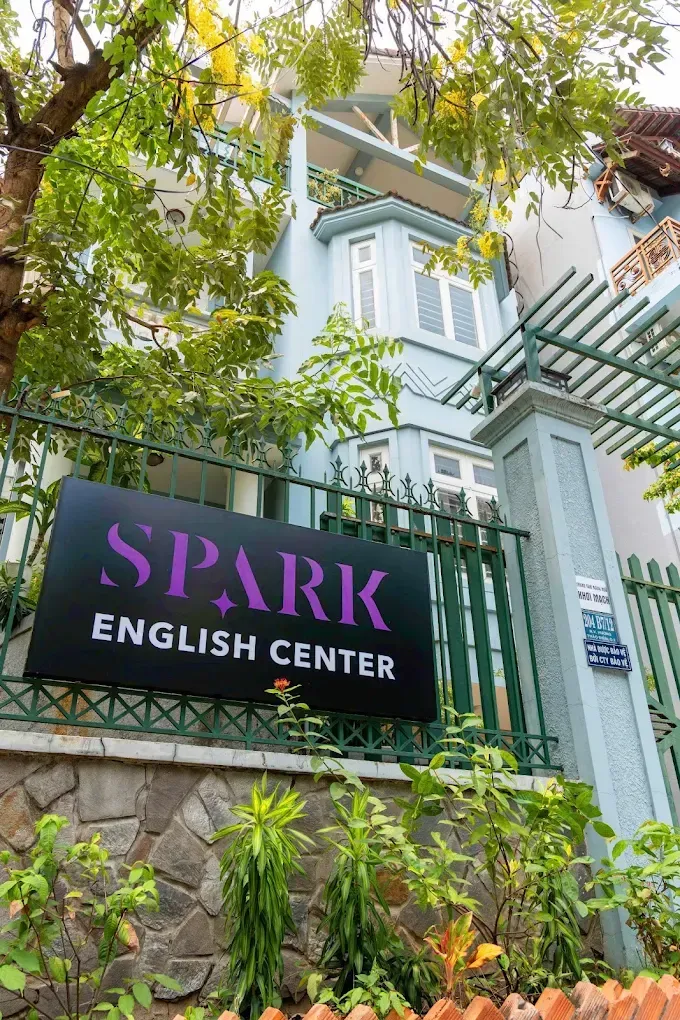
Spark English Center Vietnam Location: Thao Dien, Ho Chi Minh City Specialization: Small group literacy and language instruction for international school students Serving: Korean, Japanese, Vietnamese, and international families throughout HCMC
Let's turn struggle into success—together, in a small group of peers who understand exactly what your child is experiencing.