The 15-Minute Home Routine That Doubles Your Child's English Progress (Even If Your English Isn't Perfect)
The Guilt and Confusion Parents Feel
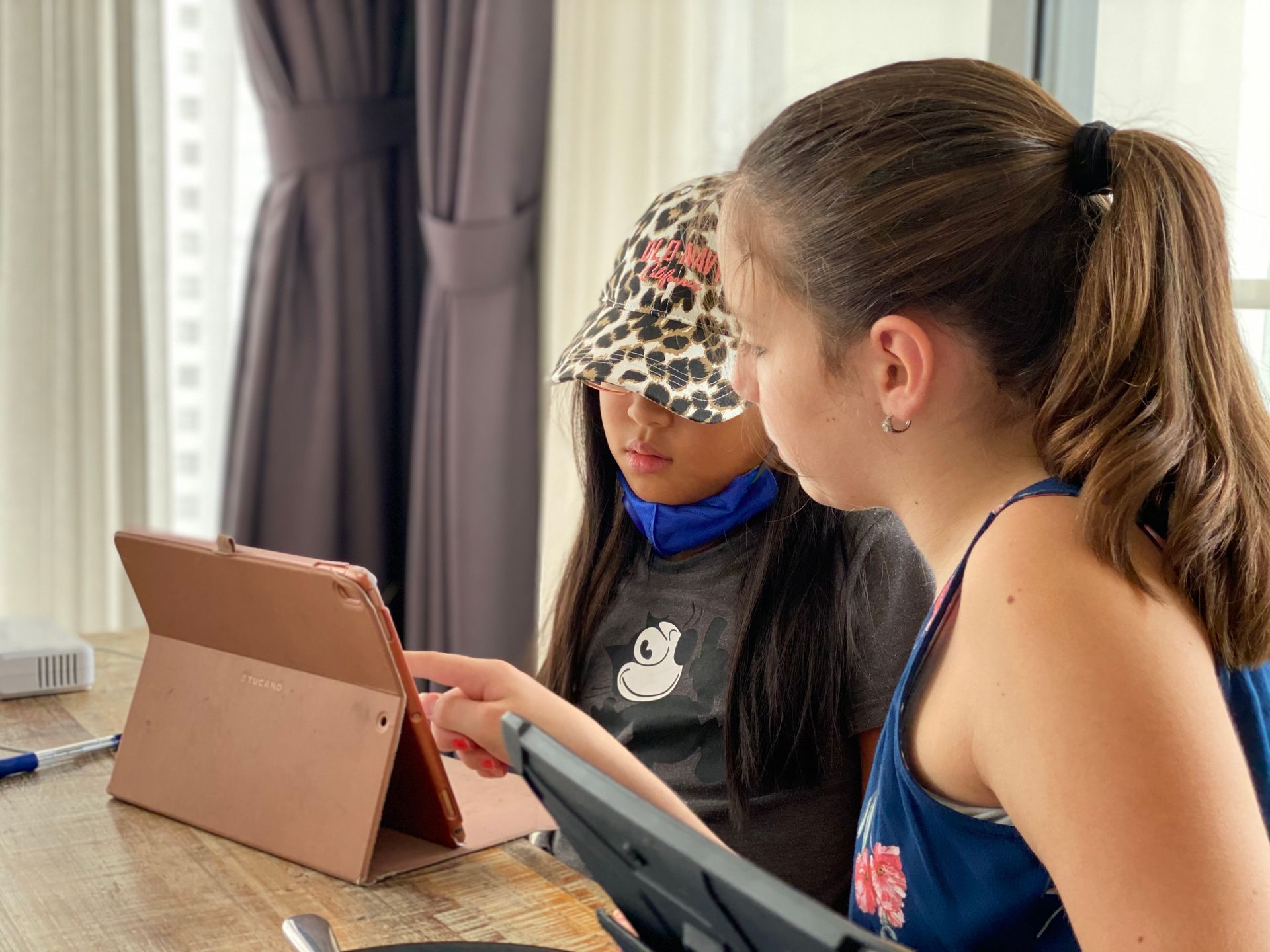
You sit next to your child during homework time, watching them struggle with English reading or writing. You want to help. But you're not sure what to do.
Should you correct every mistake? Let them figure it out themselves? Read the passage to them? Translate into Korean, Japanese, or Vietnamese so they understand?
When you do intervene, your child sometimes gets frustrated: "That's not how my teacher does it!" You feel caught between helping too much (creating dependence) and helping too little (leaving them to fail).
Meanwhile, international school teachers send home instructions like "read together 20 minutes nightly" or "practice spelling words" without explaining HOW to make that time effective.
At Spark English Center Vietnam, we know parents are their child's most important learning partner—but most parents have never been taught how to support English development effectively. That's why parent coaching is built into every program we offer.
Why Home Practice Makes or Breaks Progress
Here's an uncomfortable truth: students attending our small group lessons 2-3 times per week (totaling 90-135 minutes) spend only 2-3% of their waking hours in English instruction. The other 97-98% of time happens at home and school.
Research consistently shows that students who practice daily at home progress 2-3 times faster than students who rely solely on classroom instruction.
But—and this is critical—practice quality matters more than quantity. Fifteen minutes of focused, structured practice beats an hour of frustrating homework battles.
The Five Parent Traps That Sabotage Home Practice
Before we explain what DOES work, let's identify what doesn't:
Trap 1: Over-Correcting Stopping your child every few words to correct pronunciation or grammar kills flow, increases frustration, and makes reading feel like punishment.
Trap 2: Translation Dependence Translating every unknown word into Korean, Japanese, or Vietnamese prevents your child from developing English-to-meaning connections. They learn to rely on translation rather than building direct comprehension.
Trap 3: Doing the Work For Them When homework gets hard, parents often jump in to give answers, write sentences, or explain concepts. Short-term relief, long-term dependence.
Trap 4: Inconsistent Practice Practicing 90 minutes twice per week is less effective than 15 minutes seven days per week. Consistency builds habit and automaticity.
Trap 5: Pressure and Comparison Constant comparison to siblings or classmates ("Why can't you read like your friend?") destroys motivation and creates anxiety around English.
The Spark English Center Vietnam 15-Minute Daily Routine
We teach every parent a simple, research-based routine that takes just 15-20 minutes and produces measurable results:
Minutes 1-3: Phonics/Skill Warmup
What to Do: Review current skill focus (provided by your Spark teacher) using flashcards or quick oral drills.
Example for Phonics Focus:
- Show word cards with target pattern (e.g., vowel teams)
- Child reads each word quickly
- Parent says "yes" or models correct pronunciation
- Fast pace, high energy, playful tone
Example for Vocabulary Focus:
- Review 5 target words using picture cards
- Child says word, uses it in a sentence
- Parent asks a follow-up question using the word
Parent Role: Energetic practice leader. Keep it fast and fun. Don't lecture.
Minutes 4-12: Focused Reading Practice
What to Do: Child reads a short passage (100-200 words) matched to their current level. This is provided by Spark English Center Vietnam or selected from our recommended book list.
The Three-Read Method:
Read 1 - Assessment Read: Child reads aloud while parent follows along silently. Parent marks errors lightly on paper or mentally notes them. DO NOT interrupt.
Read 2 - Corrected Read: Parent reviews 2-3 most important errors. Child rereads the passage, focusing on accuracy. Parent gives immediate positive feedback when corrections are made.
Read 3 - Fluency Read: Child reads for speed and expression. Parent can time this read and track progress weekly (words per minute).
Parent Role: Active listener and supporter. Limit corrections to 2-3 per read. Praise effort and improvement.
Minutes 13-15: Comprehension Check
What to Do: Parent asks 2-3 simple questions about what was read:
- "Who was the main character?"
- "What happened in the story?"
- "Why did [character] do [action]?"
Critical Rule: Ask questions in English and encourage English responses. If your child answers in Korean, Japanese, or Vietnamese, gently prompt: "Can you tell me in English?"
If they can't, accept the L1 response this time and model the English version: "Oh, so in English we would say..."
Parent Role: Conversation partner building comprehension, not interrogator testing them.
Minutes 16-18: Word Building or Writing (Alternate Days)
Option A - Word Building (Mon/Wed/Fri): Using magnetic letters, letter tiles, or pencil-and-paper:
- Build 5 words using today's phonics pattern
- Child reads each word
- Child uses 2-3 words in oral sentences
Option B - Sentence Writing (Tue/Thu/Sat):
- Child writes 2-3 sentences about what they read or did today
- Parent checks together, focusing on 1-2 teaching points (not every error)
- Child rewrites corrected sentences
Parent Role: Guide, not editor-in-chief. Prioritize. Don't mark every mistake.
Minutes 19-20: Celebration and Goal-Setting
What to Do:
- Celebrate something specific: "Your reading was smoother today!" or "You figured out that tricky word!"
- Set a micro-goal for tomorrow: "Tomorrow let's try to read even faster."
- End on positive note: high-five, hug, or simple "Great job today."
Parent Role: Encouragement specialist. Always end positively.
Adapting the Routine for Different Ages and Levels
For Beginning Readers (Grades 1-2, Early English Learners):
- Shorten to 10-12 minutes
- Focus heavily on phonics warmup and single-sentence reading
- Use more pictures and physical movement
- Accept single-word responses to comprehension questions
For Intermediate Readers (Grades 3-4):
- Standard 15-minute routine
- Gradually increase passage length
- Add more inferential comprehension questions
- Introduce simple written responses
For Advanced Readers (Grades 5+):
- Extend to 20 minutes if student is willing
- Focus more on comprehension, vocabulary, and writing
- Student can read silently, then discuss
- Add critical thinking questions: "What would you have done differently?" "Do you agree with the character's choice?"
The "My English Isn't Good Enough" Concern
Many Korean, Japanese, and Vietnamese parents worry: "How can I help if my English pronunciation isn't perfect?"
Here's the truth: You don't need perfect English to be an effective practice partner.
What matters most:
- Consistency: Being present for 15 minutes daily
- Encouragement: Creating a positive, low-stress environment
- Listening: Paying attention to your child's efforts
- Following structure: Using the routine we teach you
What you CAN do even with limited English:
- Listen to your child read and notice if it sounds smooth or choppy
- Track reading speed (words per minute) on a chart
- Follow along in the book and point out skipped words
- Ask comprehension questions in your home language if needed
- Celebrate effort and improvement
What Spark English Center Vietnam provides:
- Audio recordings of passages (you and your child can listen together)
- Video demonstrations of parent techniques
- Written instructions in English with key translations
- Weekly WhatsApp support for quick questions
- Monthly parent workshops
Real Parent Testimonials: The Home Practice Difference
Korean Mother, Grade 3 Student: "I was nervous because my English pronunciation is not good. But Spark English Center Vietnam showed me I don't need perfect English—I just need to listen and encourage. We do 15 minutes every night after dinner. In two months, my son's reading speed doubled and he actually asks to practice now!"
Vietnamese Father, Grade 4 Student: "Before Spark's parent coaching, homework time was fighting time. Now we have a clear routine. I know exactly what to do. My daughter knows what to expect. It takes 15 minutes and we're done. Her confidence has completely changed."
Japanese Mother, Grade 2 Student: "The three-read method was game-changing. Before, I corrected every mistake and my daughter cried. Now I stay quiet during first read, correct just 2-3 things, then we read again. She's so much happier and reading better."
The Materials and Resources Spark Provides
For Every Student Enrolled:
Custom Home Practice Kit:
- Decodable readers matched to current skill level (refreshed monthly)
- Phonics flashcards or word cards for current focus
- Progress tracking chart (reading speed, accuracy, confidence)
- Parent instruction guide with visual demonstrations
Digital Resources:
- Access to audio recordings of practice passages
- Video library of parent coaching techniques
- Printable games and activities for variety
- WhatsApp group for parent support and questions
Monthly Parent Workshop:
- 45-minute session teaching specific support strategies
- Q&A with experienced teachers
- Sharing of ideas among parents
- Celebration of student progress
Weekly Communication:
- Quick message updating you on what your child is learning
- Specific home practice focus for the week
- Answers to your questions within 24 hours
Beyond the 15-Minute Routine: Creating an English-Rich Home
While the 15-minute routine is your core daily practice, these additional strategies accelerate progress without adding structured practice time:
Environmental Print:
- Label household objects in English (refrigerator, door, table, mirror)
- Post current vocabulary words on bathroom mirror or bedroom door
- Create a "word wall" where family adds interesting English words
Casual English Exposure:
- Watch one English-language show or video (20-30 min) with English subtitles
- Listen to English songs during car rides or breakfast
- Play English audiobooks during quiet time
Functional English Use:
- Let your child read simple things: shopping lists, restaurant menus, product labels
- Ask them to be your "English helper": "Can you read this sign?" "What does this package say?"
- Give simple instructions in English: "Please get your shoes." "Turn off the light."
Low-Pressure Speaking:
- Daily question in English: "What was the best part of school today?"
- Dinner table rule: Share one sentence about your day in English
- Bedtime routine: Say goodnight and three things you're grateful for in English
Critical Principle: These activities are LOW-PRESSURE and NATURAL. Not quizzes. Not tests. Just gentle exposure that normalizes English use without creating anxiety.
Addressing Common Challenges
Challenge 1: "My child refuses to practice at home."
Solution:
- Start with 5 minutes instead of 15. Build habit first, duration second.
- Let your child choose what to read (within appropriate level)
- Create a visual reward system: stickers on calendar, points toward small privilege
- Practice at the same time daily so it becomes automatic routine
- Never use practice as punishment or threaten to take it away
Challenge 2: "My child wants to translate everything into Korean/Japanese/Vietnamese."
Solution:
- Use pictures and gestures to convey meaning before allowing translation
- Encourage guessing from context: "What do you think it might mean?"
- Model English-only responses: If child answers in L1, repeat their idea in English naturally
- Don't punish L1 use, just gently redirect: "Let's try saying that in English."
- Over time, reduce translation as comprehension improves
Challenge 3: "Practice time turns into arguments and tears."
Solution:
- Check if material is too difficult (should be 95%+ accuracy on first read)
- Shorten practice time—better to end positively at 8 minutes than battle through 15
- Change location: practice outside, in different room, at park
- Take a break: if emotions are high, come back to it later
- Contact Spark teacher for advice and possible material adjustment
Challenge 4: "I don't have time—our schedule is too busy."
Solution:
- Practice can happen anywhere: in car, waiting for sibling's class, before bed
- 10 minutes is better than zero minutes
- Weekend make-up: if you miss weekdays, do two 20-minute sessions on Saturday/Sunday
- Involve other family members: older sibling, grandparent, helper can support routine
- Remember: 15 minutes daily = 90 minutes weekly, same as an extra tutoring session
Challenge 5: "My child practices but I don't see improvement."
Solution:
- Track concrete data: words per minute, error count, comprehension scores
- Improvement is gradual—look for 4-week trends, not day-to-day changes
- Contact Spark English Center Vietnam teacher to review practice approach
- May need diagnostic reassessment to ensure current focus is correct
- Celebrate small wins: smoother reading, one fewer error, better attitude
The Parent-Teacher Partnership
At Spark English Center Vietnam, we believe parents and teachers must work as a coordinated team. Here's how we make that happen:
Initial Parent Orientation: After your child's diagnostic assessment and group placement, you attend a 30-minute orientation where we:
- Explain your child's specific learning needs
- Demonstrate the home practice routine
- Provide materials and resources
- Answer all your questions
- Set up communication channels
Weekly Updates: Every week, you receive a message with:
- What your child learned in group lessons
- Specific home practice focus for the week
- Any challenges or wins the teacher observed
- Encouragement and tips
Monthly Progress Reports: Detailed written report including:
- Measurable progress data (fluency scores, accuracy rates, etc.)
- Skills mastered and skills still in progress
- Updated goals for next month
- Home practice effectiveness observations
- Recommendations for adjustments
Open Communication:
- Quick questions answered within 24 hours
- Concerns addressed promptly
- Parent-teacher conferences available anytime
- Flexibility to adjust approach based on what's working at home
Frequently Asked Questions About Home Support
Q: What if I work long hours and can't do daily practice?
A: Consistency matters more than who does it. A grandparent, older sibling, or reliable helper can lead the practice routine using our materials and instructions. If truly no one is available, weekend intensive practice (two 30-minute sessions) plus our increased lesson frequency can partially compensate.
Q: Should I let my child use translation apps or dictionaries?
A: For homework completion, yes. For practice reading, no. During practice time, we want to build automatic word recognition and comprehension without translation. For school assignments, reasonable use of tools is fine.
Q: How do I know if the practice materials are the right level?
A: Your child should read with 95%+ accuracy. If they're making more than 5 errors per 100 words, the material is too hard. Contact us for easier materials.
Q: Can I practice more than 15 minutes if my child is willing?
A: Quality over quantity. If your child enjoys it, 20-25 minutes is fine. Beyond that, you risk fatigue and diminishing returns. Better to practice twice daily (morning and evening) at 10-15 minutes each.
Q: What if my child practices perfectly at home but still struggles at school?
A: This suggests they're not transferring skills to school contexts. Inform your Spark teacher—we'll adjust instruction to include more school-like tasks and coordinate with your child's school teacher if needed.
Start Building Your Home Practice Routine Today
Your child spends only a few hours per week in English instruction. The remaining 160+ waking hours are where language development really accelerates—or stalls.
With the right structure, support, and resources, you can transform those 15 daily minutes into your child's most powerful learning time. And you don't need perfect English or teaching credentials to do it effectively.
At Spark English Center Vietnam, we teach you exactly how. Parent coaching isn't an add-on—it's built into every program because we know parent involvement doubles results.
Book your free assessment and parent orientation: https://www.sparkvn.com/Assessment
Spark English Center Vietnam Location: Thao Dien, Ho Chi Minh City Specialization: Literacy instruction with comprehensive parent coaching for international school families Serving: Korean, Japanese, Vietnamese, and international families throughout HCMC
Let's work together to unlock your child's English potential—starting with just 15 minutes a day.