The International School Paradox: Why English Immersion Isn't Enough (And What Actually Works for Korean, Japanese & Vietnamese Students in HCMC)
The Promise vs. The Reality
You made a significant investment: international school tuition in Ho Chi Minh City. The marketing promised English immersion, global curriculum, and bilingual fluency. Your child would become confidently bilingual, ready for university anywhere in the world.
Fast-forward to today. Your child has been in international school for 2, 3, or even 4 years. But the reality doesn't match the promise:
- They understand spoken English but speak in short, simple sentences
- Reading fluency lags behind native-English-speaking classmates
- Writing assignments require heavy parental support
- They avoid participation in class discussions
- Homework takes twice as long as it should
- Grades are acceptable but you see the struggle beneath the surface
You wonder: Is something wrong with my child? Should we switch schools? Did we make a mistake choosing international education?
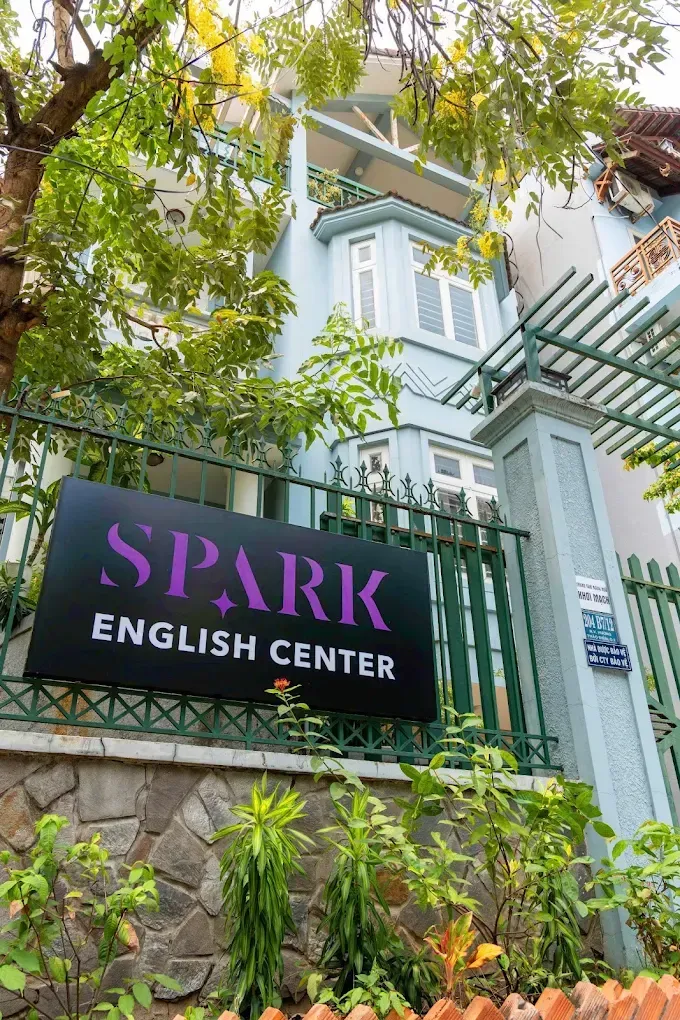
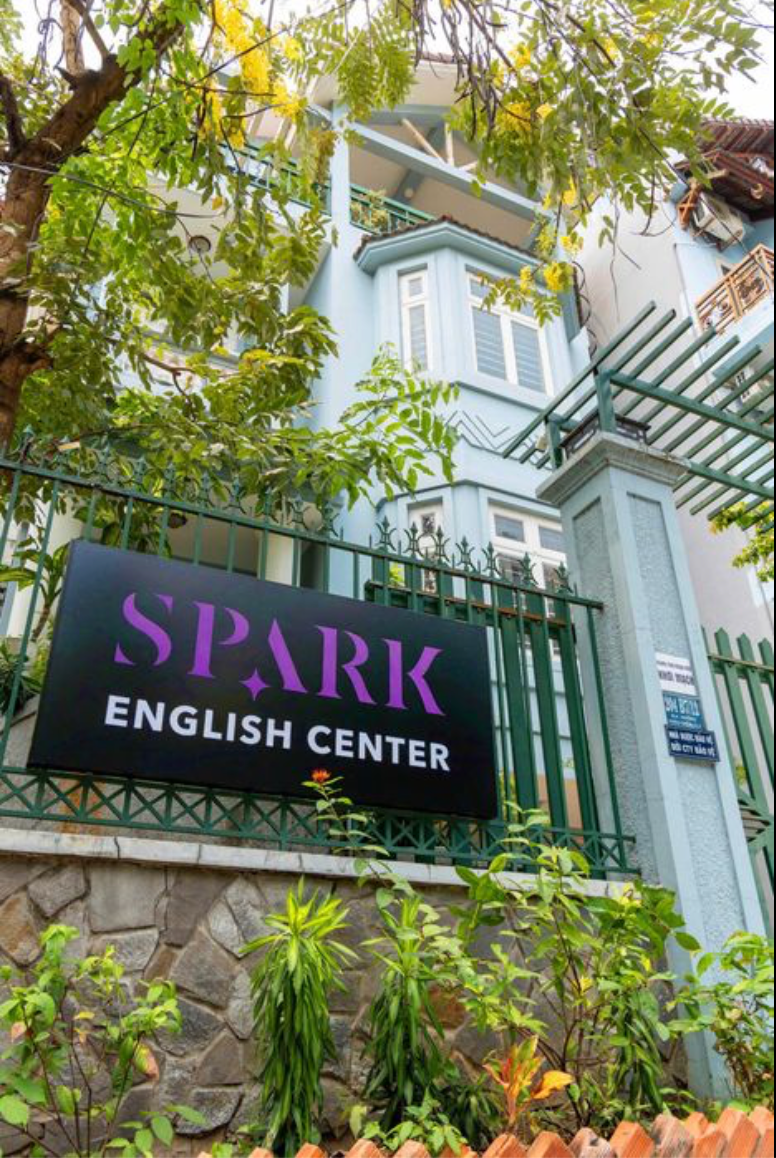
At Spark English Center Vietnam in Thao Dien, we work with dozens of families experiencing this disconnect. Let me tell you clearly: Nothing is wrong with your child. The international school model has structural limitations that affect English language learners predictably.
Understanding these limitations—and implementing targeted support—transforms struggle into success.
Why International Schools Struggle to Teach English Effectively
International schools excel at many things: global curriculum, diverse environment, critical thinking, project-based learning. But most are not optimally designed to teach English as an additional language. Here's why:
Limitation 1: Immersion Assumptions
International schools operate on an immersion model that assumes high English exposure. This works when:
- Children started English in early childhood (ages 2-5)
- English is used extensively at home
- Parents are comfortable with English
For Korean, Japanese, and Vietnamese families who primarily use L1 at home and whose children started English in elementary school, immersion alone is insufficient. These students need explicit, systematic English instruction that most international schools don't provide.
Limitation 2: Large Class Sizes
With 20-25 students per class, teachers cannot provide the frequency of corrective feedback and individual practice time that language acquisition requires. Research shows language learners need 20+ feedback moments per lesson—impossible in large classes.
Limitation 3: Content-First, Language-Second Approach
International schools teach math, science, and social studies IN English but rarely teach English itself systematically. Teachers assume students will "pick up" grammar, vocabulary, and literacy skills through content exposure.
This works for students with strong foundational English. For students with gaps, every content lesson becomes overwhelming—they're simultaneously trying to learn new concepts AND the language to understand them.
Limitation 4: Fast Curriculum Pacing
International schools move rapidly to cover standards and prepare for assessments. Students who miss a skill or concept are expected to self-remediate. There's little time for review, spiral back, or intensive reteaching.
Limitation 5: Assessment Gaps
Schools report progress using content-based assessments and broad measures like "meeting grade level expectations." These can mask specific literacy gaps:
- A student might pass comprehension tests but lack decoding automaticity
- Writing might be "acceptable" but show grammatical fossilization
- Oral participation might seem fine but lack academic language complexity
Limitation 6: Inadequate Literacy Intervention
Most international schools lack specialized reading intervention programs. When students struggle, schools recommend:
- "Read more at home" (without teaching HOW to practice effectively)
- Generic tutoring (which often addresses homework completion, not skill-building)
- Waiting longer, assuming the child will "catch up with time"
The Three Student Profiles We See at Spark English Center Vietnam
Profile 1: The "Conversationally Fluent" Struggler
Description: Your child chats comfortably with friends in English. They can discuss recess, video games, movies with ease. But academic tasks are difficult: reading grade-level texts, writing organized paragraphs, understanding complex instructions.
What's Actually Happening: Social language (BICS: Basic Interpersonal Communication Skills) develops in 1-2 years. Academic language (CALP: Cognitive Academic Language Proficiency) takes 5-7 years. Your child has social fluency but lacks academic language.
What They Need: Explicit vocabulary instruction in academic terms. Practice with academic sentence structures. Exposure to and practice with informational texts, not just stories.
Profile 2: The "Decoding Gap" Reader
Description: Your child can read simple books fine but struggles when texts get longer or contain unfamiliar words. They rely on memorized sight words and guessing from context. Spelling is inconsistent. Reading speed is slow.
What's Actually Happening: Phonics foundations are incomplete. Your child lacks automatic decoding skills for multisyllabic words, complex vowel patterns, and morphological chunks (prefixes, suffixes, roots).
What They Need: Systematic phonics remediation. Fluency-building with decodable texts. Explicit morphology instruction.
Profile 3: The "Silent Participant"
Description: Your child understands classroom instruction (receptive language is strong) but rarely volunteers, gives one-word answers, and avoids oral presentations. Writing shows grammatical errors even when ideas are good.
What's Actually Happening: Expressive language lags behind receptive language. Your child has "intake" but limited "output" practice. Without feedback on production, errors fossilize and confidence declines.
What They Need: Small-group speaking practice with immediate feedback. Structured oral language activities. Grammar instruction connected to their actual errors.
The Research-Backed Solution: Targeted After-School Intervention
Multiple research studies show that English language learners in mainstream/immersion settings benefit enormously from pull-out or after-school targeted instruction that addresses specific skill gaps.
Key findings:
- Small-group targeted intervention produces 2-3x faster progress than classroom-only instruction
- Explicit phonics instruction accelerates reading development for L2 learners
- High-feedback-density environments (20+ corrections per lesson) dramatically improve acquisition speed
- Home practice routines, when structured correctly, double learning rates
This research informs everything we do at Spark English Center Vietnam.
What Effective Support Looks Like: The Spark Model
Component 1: Diagnostic Assessment (Before Anything Else)
We don't guess. We measure. Every student completes our comprehensive assessment covering:
- Phonics and decoding
- Reading fluency (WPM and accuracy)
- Reading comprehension
- Oral language and vocabulary
- Writing skills
- Academic language proficiency
This creates a precise learning profile showing what your child CAN do and exactly which skills need development.
Component 2: Targeted Skill-Building (Not Homework Help)
Based on assessment, your child joins a program targeting their specific gaps:
For decoding gaps:
- Systematic phonics remediation (4-8 weeks)
- Decodable text practice
- Fluency drills with progress monitoring
For comprehension/vocabulary gaps:
- Academic vocabulary instruction
- Comprehension strategy teaching
- Exposure to informational texts
- Oral discussion practice
For writing/grammar gaps:
- Sentence-level grammar tied to student's actual errors
- Paragraph organization strategies
- Process writing with multiple drafts and feedback
For oral language gaps:
- Structured speaking activities
- Presentation skills
- Academic discussion protocols
Component 3: Small Group Instruction (Maximum 6 Students)
We group students by specific skill need and level—not just age or grade. With 4-6 students, each child receives 20+ feedback moments per lesson. Compare this to 2-3 in a school class of 25.
Component 4: School Alignment
We coordinate with your child's international school:
- Request school literacy data to ensure alignment
- Use similar assessment systems for consistency
- Practice the same text types and formats students see at school
- Communicate progress so school teachers understand improvement
Our goal: make school easier for your child, not create conflicting approaches.
Component 5: Parent Coaching
Parents receive:
- Structured 15-minute daily practice routine
- Materials matched to current focus
- Coaching on how to support without creating dependence
- Weekly updates on what to practice at home
- Monthly progress reports
Component 6: Progress Monitoring & Adjustment
- Weekly informal checks (fluency, accuracy, engagement)
- Monthly formal reassessment
- Flexible regrouping if student progresses faster or needs different focus
- Transparent data sharing with families
Component 7: Cultural & Linguistic Understanding
We specialize in Korean, Japanese, and Vietnamese learners. We understand:
- L1 interference patterns (how your home language affects English)
- Cultural communication styles and expectations
- Family educational values and priorities
- Bilingual identity development
Timeline: What Progress Actually Looks Like
Weeks 1-4: Foundation & Habit Building
- Student adjusts to small group format
- Baseline skills strengthened
- Home practice routine established
- Initial confidence gains apparent
Weeks 5-8: Measurable Skill Gains
- Reading fluency improves (+10-20 WPM typical)
- Decoding accuracy increases
- Oral participation in group increases noticeably
- Parents report homework is getting easier
Weeks 9-12: Transfer to School Context
- Skills transfer to school tasks
- Grades begin improving
- Student volunteers more in school classes
- Writing shows clearer organization
Months 4-6: Sustained Proficiency
- Independent reading habit develops
- Student self-corrects errors
- Academic confidence is strong
- School performance is solid
Long-term (6-12 months):
- Skills are automatic
- Student performs at or above grade-level expectations
- English is no longer a barrier to learning content
- Student may transition to maintenance or advanced programs
Real Success Story: Complete Case Study
Student: Korean, Grade 4, 3 years at international school
Initial Parent Concerns: "She understands everything at school but reading is painfully slow. Homework takes 3 hours every night. She cries and says she's stupid. Her confidence is destroyed."
Diagnostic Assessment Results:
- Conversational English: Strong, age-appropriate
- Phonics: Weak on vowel teams, syllable division, multisyllabic decoding
- Reading Fluency: 58 WPM (grade target: 110-120 WPM)
- Reading Comprehension: 65% when reading independently, 90% when text is read aloud (revealing decoding is the bottleneck)
- Writing: Ideas are good, but many spelling errors
- Diagnosis: Severe decoding automaticity gap limiting fluency and draining comprehension capacity
Intervention Plan (12 Weeks):
- Small group phonics remediation (4 students, similar profiles)
- 3 sessions per week at Spark English Center Vietnam
- Focused on advanced phonics patterns and multisyllabic decoding
- Daily 15-minute home practice with parent coaching
- Coordination with school teacher
Week-by-Week Progress:
Weeks 1-4:
- Reading fluency: 58 → 68 WPM (+10 WPM)
- Mastered vowel team patterns (ai, ea, oa, igh)
- Homework time reduced from 3 hours to 2 hours
- Crying episodes decreased
- Parent feedback: "She's starting to believe she can do this."
Weeks 5-8:
- Reading fluency: 68 → 85 WPM (+17 WPM additional gain)
- Mastered syllable division rules
- Successfully decoding 3-4 syllable words
- Homework time down to 90 minutes
- Volunteered to read aloud in small group (first time ever)
- Teacher feedback: "Ji-woo is participating more in class discussions."
Weeks 9-12:
- Reading fluency: 85 → 103 WPM (+18 WPM additional gain)
- Total gain: +45 WPM in 12 weeks
- Comprehension improved to 82% on grade-level passages
- Spelling dramatically improved
- Homework takes 60 minutes (half the original time)
- Reading chapter books independently at home
- School writing assignment received "excellent" grade
Parent Testimonial (3 months later): "Ji-woo is a different child. She reads confidently now. Homework is no longer torture. Most importantly, she stopped saying she's stupid. Last week she told me, 'Mom, I'm actually pretty good at reading now.' Spark English Center Vietnam gave my daughter back her confidence and gave our family back our evenings."
Common Mistakes Parents Make When Seeking Support
Mistake 1: Waiting Too Long "Let's give it one more semester and see if she catches up naturally."
Reality: Gaps widen with time. Every month of delay means more frustration, lower confidence, and larger achievement gaps. Early intervention is dramatically more effective.
Mistake 2: Generic Homework Tutoring Hiring a tutor to help complete daily assignments addresses symptoms, not root causes. Homework becomes easier temporarily but underlying skill gaps remain.
What works: Diagnostic assessment followed by targeted skill-building that eliminates gaps.
Mistake 3: Adding More School Hours "Maybe if we do summer school or extra classes at school, that will help."
Reality: More of the same approach (large classes, fast pacing, immersion without explicit instruction) rarely fixes problems created by that approach.
What works: Different approach—small groups, explicit instruction, high feedback density.
Mistake 4: Blaming the Child "She just needs to try harder." "He's lazy about reading."
Reality: Struggling students are often working harder than their peers, but without the right skills, effort doesn't translate to success.
What works: Providing the specific skills that unlock effort into results.
Mistake 5: Switching Schools "Maybe a different international school would be better."
Reality: Most international schools have similar structures and limitations. Switching schools disrupts friendships and routines without addressing the actual skill gaps.
What works: Stay at current school while adding targeted after-school support.
Frequently Asked Questions About International School Support
Q: Will after-school programs make my child too tired or overwhelmed?
A: We schedule after school to allow transition time (snack, movement break). Our small groups are engaging and active—students report feeling energized, not drained. Most families find that improved skills actually reduce overall stress and homework time.
Q: Should I tell my child's school teacher about outside support?
A: Yes! We encourage coordination. Share Spark progress reports with school teachers. Most teachers appreciate knowing what skills your child is working on and welcome the support.
Q: How do I choose between your programs—phonics, fluency, writing, etc.?
A: You don't have to guess. Our free diagnostic assessment identifies your child's primary need and recommends the right starting program.
Q: What if my child is behind in multiple areas?
A: We prioritize. Typically, we start with decoding/fluency (the foundation), then layer in comprehension, vocabulary, and writing. Trying to fix everything simultaneously is less effective than sequencing interventions.
Q: Can my child continue at Spark even after catching up?
A: Yes. Many students transition from remediation to enrichment programs—advanced reading, creative writing, public speaking, debate. We support students at all levels.
Q: Will this program interfere with my child's Korean/Japanese/Vietnamese language development?
A: Research shows strong L1 foundation supports L2 learning. We encourage families to maintain home language. Our programs specifically support bilingual students—we understand how to build English skills without undermining L1.
Q: What if we move or change schools?
A: The skills we build are portable. Students carry their improved reading, writing, and language abilities to any educational setting. We also provide documentation of progress for new schools.
The Cultural Dimension: Understanding Korean, Japanese & Vietnamese Learning Values
At Spark English Center Vietnam, we recognize that Korean, Japanese, and Vietnamese families bring specific cultural values and expectations to education:
High Educational Investment: Education is a top family priority. Parents make significant sacrifices for children's academic success. We honor this commitment by delivering measurable results and transparent progress reporting.
Respect for Structured Learning: Systematic, disciplined approaches to skill-building resonate with cultural values. Our evidence-based, sequential programs align with these preferences.
Emphasis on Measurable Achievement: Grades, scores, and rankings matter. We provide clear data: fluency scores, accuracy percentages, grade-level comparisons, and progress graphs.
Concern About "Falling Behind": Awareness of peer comparison drives urgency. We validate these concerns while providing realistic timelines and celebrating individual progress.
Value of Expert Guidance: Families trust specialized expertise. Our diagnostic approach and evidence-based methods provide the authoritative guidance parents seek.
Respect for Effort and Persistence: Hard work is valued. We teach students that consistent daily practice produces results—reinforcing cultural values around effort and discipline.
Bilingual Identity: Families want children to be truly bilingual—maintaining heritage language while excelling in English. We support this goal explicitly, helping children see themselves as capable in both languages.
How to Get Started at Spark English Center Vietnam
Step 1: Recognize the Signs If your child is experiencing any of these at international school:
- Reading significantly slower than peers
- Homework taking excessive time
- Avoiding reading or writing tasks
- Declining confidence or motivation
- Grades slipping despite effort
- Teacher comments about "needing more practice"
...it's time for diagnostic assessment.
Step 2: Book Free Assessment Visit https://www.sparkvn.com/Assessment to schedule your child's 45-60 minute diagnostic evaluation. Completely free, no obligation.
Step 3: Review Learning Profile Within 24-48 hours, receive detailed report identifying:
- Current skill levels across all literacy domains
- Specific gaps requiring intervention
- Recommended program and timeline
- Expected outcomes with consistent participation
Step 4: Choose Your Program Based on assessment, select from:
- Phonics & Decoding Intensive (4-8 weeks)
- Reading Fluency Builder (8-12 weeks)
- Academic Language & Vocabulary (12 weeks)
- Writing Skills Development (12 weeks)
- Comprehensive Literacy (ongoing)
Step 5: Begin Intervention Start within 1-2 weeks. Most programs meet 2-3x per week in convenient after-school time slots at our Thao Dien location.
Step 6: Track Progress & Adjust Monthly reports show measurable gains. Programs adjust based on progress speed. Celebrate achievements and set new goals.
The Spark English Center Vietnam Difference
Specialized Focus: We don't do everything—we do literacy intervention exceptionally well. This is our expertise, our passion, our track record.
Evidence-Based Methods: Every technique we use is backed by reading science research. We don't follow trends—we follow evidence.
Cultural Competence: We understand Korean, Japanese, and Vietnamese learners specifically. Your child's cultural and linguistic background informs our instruction.
Diagnostic Precision: We measure before we teach. No guessing, no generic programs. Every intervention is personalized.
Small Group Excellence: 4-6 students maximum. High feedback density. Peer support. Optimal learning environment.
Progress Transparency: You always know where your child stands. Data, graphs, concrete gains. No vague reports.
Parent Partnership: You're not outsourcing—you're partnering. We coach parents to support learning at home effectively.
Convenient Location: Thao Dien center serves international school families throughout HCMC with minimal travel time.
Proven Results: Hundreds of students have progressed through our programs. Track record speaks for itself.
Final Word: From Struggle to Strength
International school is a wonderful opportunity. Global curriculum, diverse peers, English immersion—these are genuine benefits. But immersion alone isn't enough for many English language learners.
Your child isn't failing. The system has gaps. Recognizing this is the first step. Taking action is the second.
At Spark English Center Vietnam, we've seen countless students transform from struggling, frustrated learners into confident, capable readers and writers.
The pattern is consistent:
- Diagnostic assessment reveals specific gaps
- Targeted intervention addresses those gaps systematically
- Small group instruction provides necessary practice and feedback
- Home practice reinforces daily
- Skills transfer to school context
- Confidence and performance improve measurably
This process works. The research proves it. Our students demonstrate it. Your child can experience it too.
Don't wait for struggle to resolve itself. It won't.
Don't settle for "good enough" when your child could be thriving.
Take the first step today.
Book your free diagnostic assessment: https://www.sparkvn.com/Assessment