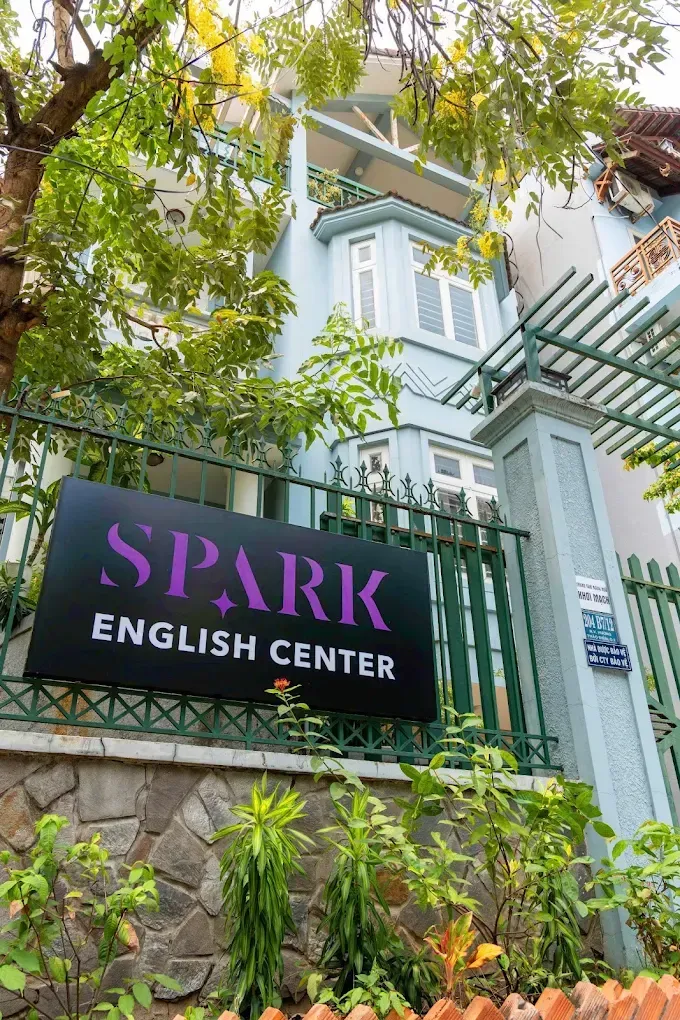
Why Is My Child Falling Behind in English at an International School? A Deep Dive for Parents in Thao Dien by Spark English Center Vietnam
Introduction: Common worry, real problem
If your child attends an international school but is still struggling with English—reading slowly, hesitant in class discussions, making basic grammar mistakes, or lacking confidence—you are far from alone. Many Korean, Japanese and Vietnamese families living in Thảo Điền, Ho Chi Minh City face the same concern. But the reason isn’t always about tuition cost or the child’s effort—it often comes down to structural issues in learning English, especially for non-native speakers in an international-school setting.
Part 1 – Diagnosing the root causes
Let’s explore the major factors that contribute to the lag in English achievement, with research and practical observations.
1. Large class sizes & limited individual feedback
In many international schools, class sizes may reach 20 or more students from various linguistic backgrounds. Teachers cover broad curriculum and may not be able to provide the frequent corrective feedback small-group learners need. Research has shown that large and multi-level classes hinder teaching speaking skills and individual growth. jklst.org
Thus, children who have missed phonics, decoding skills, or fluency get “left behind the pack”.
2. Rapid pace of curriculum and expectation of language mastery
Unlike a dedicated English-as-a-subject programme, international schools often use English as the medium of instruction across subjects (Math, Science, History). A parent article in Vietnam found exactly this:
“International schools do not teach English; instead, all subjects are taught in English… If your child does not have a strong foundation in English from the beginning … learning subjects in English can become overwhelming.” e.vnexpress.net
This means children must not only understand content but also learn language at the same time. If the language base is weak, the pace of curriculum compounds the gap.
3. Foundational gaps: Phonics, decoding & reading fluency
Many children never mastered phonics (sound–symbol relationships) or fluent reading early on. Research shows phonics is very effective in improving reading ability in non-native contexts. scholarsjournal.net+1
Without automatic decoding and reading fluency, children struggle with comprehension, vocabulary acquisition, and written expression—even if they appear “on grade level” superficially.
4. Insufficient English practice at home or outside class
Home environment plays a big role. If the child speaks mostly their native language (Korean, Japanese or Vietnamese) at home, exposure to English is limited. They may “switch off” when not in class and not engage in English reading, speaking or listening outside school.
Moreover, anecdotal evidence from schools shows that even when English-only policies exist, students revert to their L1 in peer interaction and break times.
Reddit
Hence, the mismatch between school English intake and home language usage slows progress.
5. Motivation, confidence & non-native speaker dynamics
Children who sense they’re behind peers may avoid participation, speak less, or hide errors. Studies show a significant challenge is self-confidence in speaking and writing among EFL learners. seminar.uad.ac.id
If the child rarely gets to “win” in English class (participate, be understood), motivation falls and the gap widens.
6. Curriculum-language mismatch
The “language” component of international school learning is often implicit. According to a case study:
“A student … will usually take about a year to develop communicative English and around three years to master academic English; … if the student only focuses on communication and learning grammar, their academic English ability would not be significantly improved.” isph.edu.vn
This means many children are expected to perform academic tasks (writing essays, reading textbooks) before they have built the language skills for such tasks. The mismatch results in plateauing or falling behind.
Part 2 – What parents should do immediately
Recognizing the issue is half the solution. Below are actionable steps you as a parent can take now—before waiting for semester reports.
Step A: Diagnose via a targeted assessment
You need to know which exact skills your child lacks. Get a diagnostic that covers:
- Phonics / decoding accuracy
- Reading fluency (words per minute + accuracy)
- Vocabulary knowledge
- Oral language & listening comprehension
- Written expression (sentence structure, grammar, coherence)
Without the baseline, you may waste time applying generic tutoring which misses core issues.
Step B: Prioritize remediation of foundational skills
If the diagnostic reveals gaps in phonics, decoding or fluency, fix those first. Research shows that phonics-based interventions are especially effective for non-native English learners. po.piscomed.com
Focus on:
- Letter–sound correspondence
- Blending/segmenting syllables
- Multisyllabic decoding strategies
- Timed fluency drills to build reading speed and accuracy
Once fluency is improved, comprehension and writing follow more easily.
Step C: Ensure small-group, high-feedback instruction
Instead of class size of 20+, aim for 4-6 students maximum so the tutor can:
- Monitor each student’s progress
- Provide immediate corrective feedback
- Encourage speaking, writing, and reading actively
This environment allows rapid catch-up.
Step D: Build English use at home
Language becomes meaningful through use—not just at school. Parent strategies:
- Establish a daily reading routine (10-20 minutes) in English.
- Use read-aloud or shared reading: you read a page, your child reads a page.
- Ask simple English summary questions each day (“Tell me what happened in your book”).
- Label everyday objects, use simple English routines (meals, chores, games).
- Encourage your child to speak about familiar topics in English with you (or a tutor).
Even 15 minutes daily can shift the exposure balance.
Step E: Monitor and celebrate progress
Track measurable goals: reading fluency gains, vocabulary checkpoints, increased participation in class. Celebrate even small wins to boost motivation. Connect with your child’s international-school teachers and the tutor to ensure alignment—not duplicating or conflicting efforts.
Part 3 – How Spark English Center Vietnam solves this problem (in depth)
At Spark, we have built a programme specifically to address exactly this scenario: children in international schools who are falling behind in English. Here’s how we do it:
- Free Diagnostic + Custom Plan
- 60-minute assessment: phonics, fluency, vocabulary, oral & written expression.
- A tailored action plan with 8-12 week milestones, clearly aligned with your child’s curriculum at school.
- Phonics-First Remediation Block
- Focus on foundational reading skills through structured phonics (sound–symbol relationships, decoding, blending).
- Daily short practice (10-15 minutes) with decodable texts plus teacher-led drills.
- Small-group Sessions (Max 6 Students)
- Two in-centre sessions a week + one supervised home practice slot.
- Low ratio ensures high corrective feedback and active participation.
- After-school timing (late afternoon) optimized for international school families in Thảo Điền.
- English Usage & Fluency Practice
- Interactive activities: reading aloud, paired speaking, short writing tasks.
- Use of Spark Reading-Comprehension App (where students set reading goals, receive reminders & rewards) to build consistency.
- Parent Coaching & Home Packet
- A nightly 10-minute parent packet: reading prompt, 2-minute discussion question, vocabulary check.
- Tutorials for parents to help avoid translation, encourage English thinking, and support reading routines.
- Progress Monitoring & Coordination with School
- Monthly report showing fluency progress, error reduction, vocabulary growth.
- Teacher communication established to align home and centre efforts with the international‐school curriculum.
- Transition Support to School Literacy Tasks
- We help your child apply reading and writing skills directly back in their school subjects (science, history, etc.).
- The aim: not just catch up in “English” but thrive in “English for academic success”.
Part 4 – Timeline & What Improvement Looks Like
- Weeks 1-4: Diagnostic → begin phonics remediation → daily home reading. You’ll notice fewer hesitations in reading and more participation in class.
- Weeks 5-12: Measurable fluency gains (+15-30 words/minute), increased reading accuracy, and better confidence in class tasks.
- Months 3-6: Writing improvements (longer sentences, fewer grammar errors), better comprehension in academic text, visible improvement in school work and self-confidence.
- Your child moves from “behind” to on track, and eventually ahead.
Part 5 – FAQ: Quick Answers for Busy Parents
Q: My child is in Year 4 international school but still decodes slowly—should I change schools?
A: Not necessarily. First assess foundational skills. Changing schools without remediation may just repeat the issue. Targeted intervention like what Spark offers is often more effective.
Q: They speak English at school all day—why are they still behind?
A: Language instruction in an international setting often assumes the child already has strong English. If foundational skills (phonics, fluency, home exposure) are weak, simply using English as medium isn’t enough.
e.vnexpress.net
Q: How much time does my child need at home?
A: Consistency matters more than duration. 10-20 minutes daily of focused reading + 5 minutes discussion is enough if done regularly.
Q: Are tutors enough?
A: Tutors help—but only if they diagnose what the child truly needs, work in small groups with high feedback, and coordinate with home and school. Generic tutoring often fails to produce sustainable results.
Conclusion: From worry to confidence
It’s understandably distressing when your child so much effort, attends an international school, yet still lags in English. But the good news is: this gap can be closed. The key is understanding exactly why the lag exists, taking structured, evidence-based action now, and partnering with specialists who understand both the international-school world and English language acquisition. Spark English Center Vietnam in Thảo Điền is designed for this exact scenario—small classes, phonics-first, home routines + school coordination.
Your child’s English success is not some luxury—it’s reachable. Let’s build the plan together.
👉 Book a free assessment today: https://www.sparkvn.com/Assessment