WHY INTERNATIONAL SCHOOL STUDENTS STRUGGLE WITH ENGLISH (AND HOW TO FIX IT FAST)
The Question That Haunts Parents
"We pay 600-800 million VND annually for international school. Why is my child still struggling with English?"
This question echoes through WhatsApp parent groups across HCMC.
BIS parents. ISHCMC parents. AIS parents. Vinschool parents.
Same expensive schools. Same confusion.
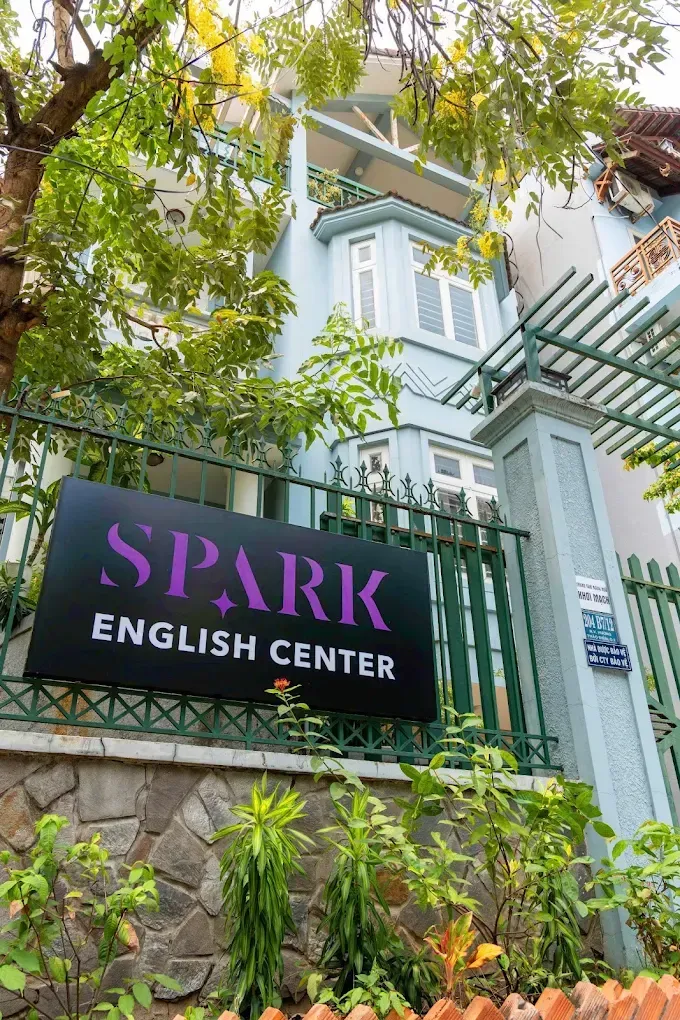
At Spark English Center Vietnam in Thao Dien, we hear this daily.
And we have answers.
The struggles are predictable. The causes are identifiable. The solutions work.
This guide reveals exactly why international school students struggle and what fixes it.
The Seven Root Causes of Struggle
Cause 1: The Academic Language Gap
The illusion:
Your child speaks English fluently with friends. Orders lunch. Discusses weekend plans. Seems fine.
The reality:
Bring home a writing assignment or reading comprehension task? Completely stuck.
Why:
Conversational English (BICS) develops in 1-3 years.
Academic English (CALP) takes 5-7 years.
Your child may have social fluency without academic proficiency.
The gap shows up as:
- Can discuss ideas orally but can't write them
- Understands simple texts but not complex academic texts
- Knows everyday vocabulary but not academic terms (analyze, evaluate, demonstrate)
- Comfortable in playground, lost in classroom
The fix:
Explicit academic language instruction:
- Academic vocabulary (Tier 2 and 3 words)
- Complex sentence structures
- Formal writing organization
- Genre-specific conventions
Timeline: 12-24 months of focused instruction to close gap.
See: Complete English Learning Pathway
Cause 2: Undiagnosed Phonics Gaps
The scenario:
Grade 4 student has been in international school since Grade 1. Three years of English immersion.
Still reads slowly, hesitantly, with frequent errors.
Why:
Many international schools assume students arrive with phonics foundation from early childhood.
They teach THROUGH English but don't teach phonics systematically.
Korean, Japanese, Vietnamese students starting English in elementary school often missed:
- Systematic letter-sound instruction
- Vowel team patterns (ai, ee, oa, igh)
- Multisyllabic decoding strategies
- R-controlled vowels (ar, or, er)
These gaps don't disappear. They compound.
Grade 4 student without vowel team mastery struggles with thousands of common words.
The fix:
Diagnostic phonics assessment followed by systematic remediation.
Most students achieve phonics mastery in 8-12 weeks of intensive instruction.
Cause 3: Reading Fluency Below Grade Level
The data:
Grade 3 student reads 65 words per minute.
Grade target: 100-120 WPM.
Gap: 35-55 WPM below.
Impact:
Reading assignments take 2x as long as peers.
Mental energy consumed by decoding, none left for comprehension.
Homework becomes an exhausting battle.
Why fluency gaps persist:
Schools provide reading practice but not systematic fluency instruction.
Students read, but without:
- Appropriate-level texts (95%+ accuracy needed)
- Repeated reading of same texts (builds automaticity)
- Timed practice (develops speed)
- Immediate error correction (prevents practicing mistakes)
The fix:
8-12 week fluency intensive combining:
- Phonics gap remediation
- Repeated reading practice
- Timed fluency tracking
- High-feedback small group instruction
Typical gains: 30-50 WPM in 8-12 weeks.
See: Reading Fluency Blueprint
Cause 4: Limited English Exposure at Home
The math:
International school: 6-7 hours daily English exposure (but not all reading/writing-focused).
Home: Primarily Korean, Japanese, or Vietnamese.
Total focused English practice: Often under 30 minutes daily.
Compare to native English speakers:
School: 6-7 hours Home: 2-4 additional hours English exposure Total: 8-10+ hours daily
The reality:
English language learners need MORE practice than native speakers to reach same level.
But often get LESS due to limited home exposure.
The fix:
Structured 15-20 minute daily home routine + intensive lessons.
Parents don't need fluent English. They need system.
Cause 5: Writing Organization Never Taught Explicitly
The pattern:
Student can generate ideas. Knows vocabulary.
Put it on paper? Disorganized. Choppy. Random.
Why:
Many international schools assign essays but don't explicitly teach:
- Topic sentence construction
- Paragraph organization
- Thesis development
- Transition use
- Essay structure
Students expected to absorb this through exposure. Most don't.
The fix:
Systematic writing instruction:
- Sentence level (weeks 1-4)
- Paragraph level (weeks 5-8)
- Essay level (weeks 9-12)
- Genre mastery (weeks 13-16)
With explicit modeling, guided practice, and revision.
Timeline: 12-16 weeks for measurable improvement.
Cause 6: Grammar Fossilization from Lack of Correction
The problem:
The student has been saying "he don't" and "many student" for years.
Knows it's wrong when pointed out. Still says it habitually.
Why:
Grammar errors become automatic through repetition without correction.
In large classes (20-25 students), teachers can't provide intensive individual error correction needed to break habits.
The fossilization cycle:
Make error → No immediate correction → Repeat error → Error becomes automatic → Very hard to fix
The fix:
Focused error correction:
- Identify student's 1-2 most frequent error patterns
- Intensive correction of JUST those patterns
- Student rewrites/respeaks with corrections
- Practice until correct form becomes automatic
- Then focus on next patterns
Not "fix everything at once" (overwhelming). Focused, sequential correction.
Timeline: 12-16 weeks for persistent errors.
Cause 7: Confidence Erosion from Repeated Failure
The emotional spiral:
Student struggles → Experiences failure → Avoids participation → Falls further behind → Confidence drops → Performance worsens
Manifestations:
- "I'm stupid" talk
- Homework tears and battles
- Reluctance to attend school
- Physical symptoms (headaches, stomachaches)
- Shutdown when faced with English tasks
Why this matters:
Anxiety consumes cognitive resources needed for learning.
Avoidance prevents practice necessary for improvement.
The fix:
Success experiences at appropriate level.
When students work at their actual level (not grade level if these differ) with proper support:
- They experience success
- Success builds confidence
- Confidence enables risk-taking
- Risk-taking enables learning
- Positive cycle begins
Timeline: Confidence improvements visible in 4-6 weeks of successful practice.
The Compounding Effect: Why Gaps Widen
Year 1:
Student enters international school with small English gap. 10% behind peers.
School teaches at grade level. Student struggles slightly but "gets by."
Year 2:
Gap widens. Now 20% behind. Homework takes longer. Some concepts missed. More frustration.
Year 3:
Gap is 30-40% behind. Student can't access curriculum independently. Needs heavy parent support. Confidence low.
Why this happens:
School curriculum assumes previous year's skills mastered.
Each year builds on last.
Student with gaps can't fully access new content.
Gaps don't close through exposure. They widen.
The intervention imperative:
Early intervention prevents widening.
Grade 1-2 intervention: 8-12 weeks often sufficient.
Grade 5-6 intervention: 6-12 months may be needed to close accumulated gaps.
Waiting makes problems bigger, more expensive, more emotionally damaging.
The Diagnostic Solution
You can't fix what you haven't diagnosed.
Generic tutoring without diagnosis wastes time and money.
What diagnostic assessment reveals:
Reading:
- Exact fluency (WPM and accuracy)
- Phonics patterns mastered vs. missing
- Comprehension level (literal and inferential)
- Decoding vs. comprehension issue (which is the bottleneck?)
Writing:
- Sentence construction ability
- Paragraph organization
- Grammar error patterns
- Vocabulary sophistication
Speaking:
- Vocabulary breadth
- Grammar accuracy
- Pronunciation issues
- Fluency and coherence
Listening:
- Comprehension of varied speech
- Academic language understanding
Result:
Clear profile showing:
- Exactly which skills are weak
- By how much
- What to target first
- Realistic timeline for improvement
Then targeted intervention, not generic tutoring.
The Spark Solution Framework
Step 1: Free Diagnostic (45-60 min)
Comprehensive assessment across all skills.
Detailed report within 24 hours.
Step 2: Targeted Program Selection
Based on assessment, recommend:
- Phonics intensive (if decoding is bottleneck)
- Fluency accelerator (if speed is issue)
- Writing development (if organization is weak)
- Comprehensive literacy (if multiple areas need support)
Step 3: Small Group Placement
Maximum 6 students, matched by:
- Skill level
- Learning goals
- Age/grade
- Language background
Step 4: High-Feedback Instruction
20-25 corrective feedback moments per child per lesson.
8-10x more than large classes.
Step 5: Progress Monitoring
Weekly checks, monthly formal reassessment.
Data-driven adjustment.
Step 6: Home Practice Integration
15-minute daily structured routine.
Parent coaching and materials provided.
Step 7: School Coordination
With permission, share progress with school teachers.
Align support, celebrate improvement.
Timeline:
Most targeted programs: 8-16 weeks
Comprehensive development: 6-12 months
Real Fix Stories
Grade 3, BIS (Male, Korean):
Struggles:
- Reading 52 WPM (target 100-120)
- Weak vowel teams, multisyllabic decoding
- Homework 2+ hours
- Tears, frustration
Diagnosis: Phonics gaps limiting fluency
Intervention: 12-week phonics + fluency intensive
Results:
- Reading 103 WPM (+51 WPM)
- Phonics mastered
- Homework 45 minutes
- Reads chapter books voluntarily
Grade 5, ISHCMC (Female, Japanese):
Struggles:
- Writing disorganized
- Grammar errors persist
- Ideas good, execution poor
Diagnosis: Writing organization and grammar accuracy gaps
Intervention: 16-week writing development
Results:
- Essays clearly organized
- Grammar 92% accurate (from 70%)
- Grades C → A-
- School writing competition winner
Grade 7, AIS (Male, Vietnamese):
Struggles:
- All subjects suffering
- Can't keep up with reading volume
- Overwhelmed
Diagnosis: Multiple gaps (fluency, vocabulary, writing)
Intervention: 6-month comprehensive literacy
Results:
- Reading 70 WPM → 142 WPM
- Academic vocabulary expanded significantly
- Writing organized and sophisticated
- Grades improved across all subjects
Pattern: Targeted intervention produces measurable results in 8-16 weeks.
Frequently Asked Questions
My child has been in international school for 3 years. Shouldn't English be fine by now?
Not necessarily. Time in school doesn't equal mastery without appropriate instruction. If gaps exist, they need targeted intervention.
The school says my child is "meeting expectations." Should I be concerned?
"Meeting expectations" is relative. If homework is difficult, reading is slow, or writing is weak, get independent assessment. School standards may differ from your child's potential.
Will struggles fix themselves with more time?
No. Research shows gaps widen without intervention. Early targeted support prevents years of struggle.
My child is in Grade 6. Is it too late?
Never too late. Older students often progress faster due to cognitive maturity. Expect 6-18 months intensive work to close gaps.
Should we switch schools?
Usually no. Most international schools have similar structures. Better to address skill gaps with targeted support while staying at current school.
How do I know if my child needs help vs. just normal learning curve?
Get diagnostic assessment. Clear data shows whether child is on track or needs intervention.
Protect Your International School Investment
You're spending 600-800 million VND annually.
If your child struggles, that investment is compromised.
Spark Diagnostic + Intervention:
Free diagnostic assessment
Then targeted programs:
- 8-12 week intensives: 18-25 million VND
- 12-16 week comprehensive: 24-35 million VND
That's 3-5% of one year's tuition.
What you get:
✅ Exact diagnosis of struggles
✅ Targeted solution (not generic tutoring)
✅ Measurable improvement in 8-16 weeks
✅ Skills that transfer to all subjects
✅ Protection of your entire education investment
Without intervention:
❌ Struggles continue, worsen
❌ Confidence erodes
❌ Years and money wasted
❌ Eventually crisis intervention needed (more expensive)
Bottom line:
Small investment now prevents big problems later.
Take Action: Understand Why Your Child Struggles
Book free diagnostic assessment:
You'll discover:
- Exact causes of struggle (not guessing)
- Measurable gaps
- Clear solution pathway
- Realistic timeline
- What to do next
Contact:
- Phone: 0398143487
- Email: sparkalcvn@gmail.com
- Location: 204B7/12 Nguyen Van Huong, Thao Dien, HCMC
Stop wondering. Start fixing.
Related:
External:
Spark English Center Vietnam | Thao Dien, HCMC | We Diagnose, We Fix, We Prove It