How to Choose an English Center in HCMC: An Honest Guide
How to Choose an English Center for Your International School Child in HCMC: An Honest Guide
Choosing an English center for an international or bilingual school child in HCMC is harder than it should be. The big chains advertise everywhere, the smaller centers are not always easy to find, the private tutors operate by word of mouth, and almost nobody in the category will give you an honest comparison. Most centers want you to book a sales call so they can pitch. Most reviews online are either anonymous complaints or paid placements. Parents are left to make a consequential decision with surprisingly little reliable information.
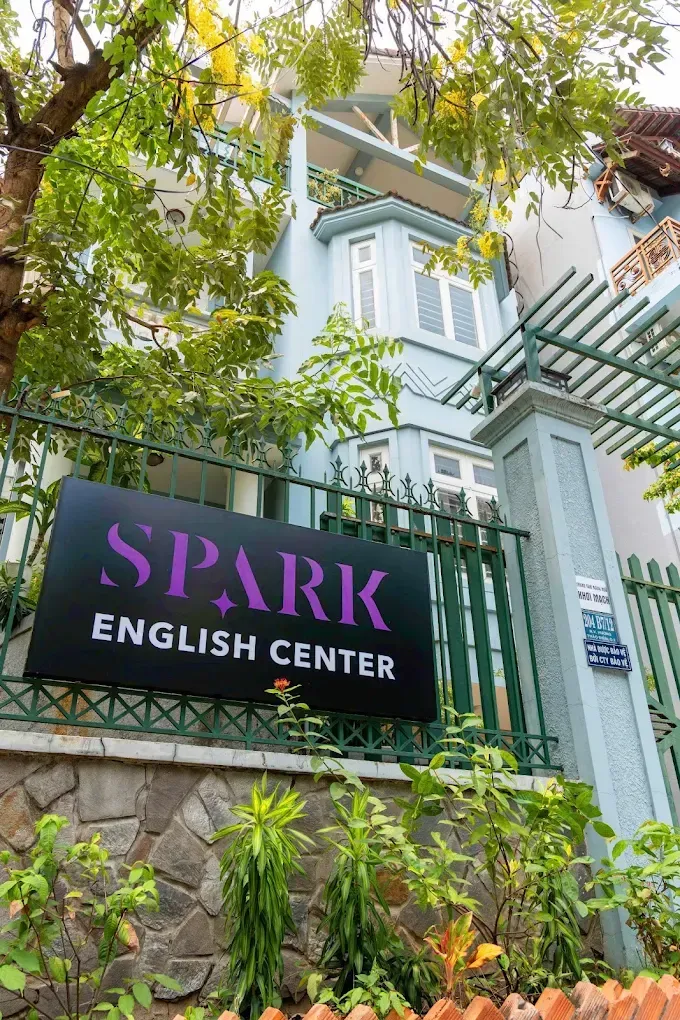
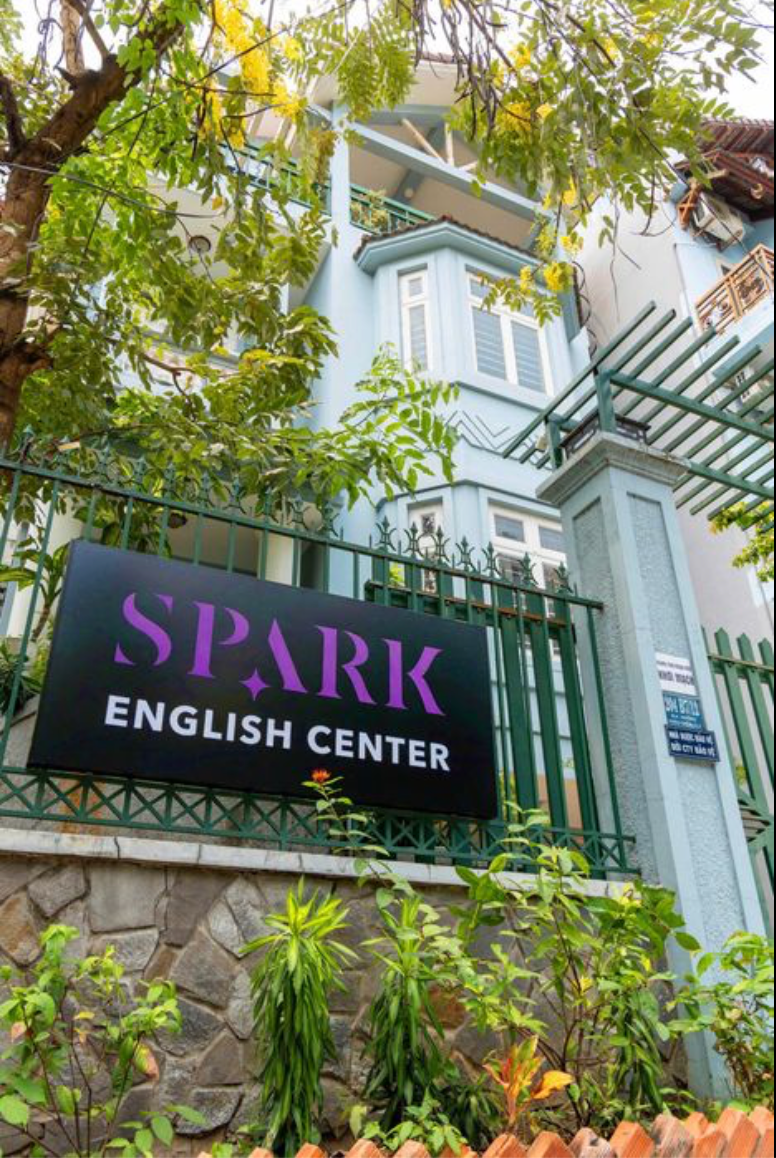
This guide is our attempt to give parents the framework we wish was available when we started Spark. We are an English center ourselves, in Thao Dien, focused on international and bilingual school families. We have a clear interest in your child being a good fit for us. But we have written this honestly enough that you should be able to use it to evaluate any center, including ours, and even to walk away from us if the framework points elsewhere. We would rather you find the right English support than the closest one.
A note before we begin. The honest answer to "what is the best English center in HCMC" is not a name. It is a fit. The right English center for a Year 2 child needing phonics is different from the right one for a Year 11 child preparing for IGCSE English Literature. The right answer for a Korean transfer student starting at AIS is different from the right answer for a Vietnamese family at Vinschool. The framework below helps you find your fit. The brand names are secondary.
Step 1: Get clear on what you actually need
Before evaluating any center, take an hour to clarify what you are solving for. Most parents skip this step and end up evaluating options against an unclear target.
What is the actual problem?
There are five common reasons international school families in HCMC seek outside English support. Identify which is yours. The right center for each is different.
The struggling child. School reports show "below expectations" in English. The child cannot keep pace with classroom demands. What you need: a center that can diagnose accurately, group rigorously, and rebuild specific skills. Class size matters; methodology matters; teacher quality matters most.
The plateaued child. Early progress was good, but English has stopped improving. Often happens around B1 or grades 5 to 7. What you need: a center that can identify the specific blocker (vocabulary depth, writing structure, academic English vs conversational) and address it directly.
The transitioning child. The family is moving into the international school system from another school context. What you need: a calibrated bridging program with experience preparing children for the specific target school's entrance assessment and curriculum.
The exam-pressured child. IGCSE, IB English, or IELTS is approaching. What you need: a center that knows the specific exam in depth and balances exam technique with genuine language work.
The reluctant or anxious child. Emotional resistance to English class, refusal to read, freezing in oral assessments. What you need: a small-group setting that feels safe, teachers who understand affective barriers to language learning, and patience.
What is your timeline?
Twelve months out from a target (university entrance, IGCSE exams, school transfer)? You can work systematically. Three months out? You need an intensive program with a specialist center, not a generalist. Open-ended supplementary support? You can prioritize fit over speed.
What is your budget?
Be honest. Quality English tuition in HCMC ranges from roughly 200,000 VND per session for a private tutor at the lower end of the market to 800,000 VND or more per session for specialist small-group instruction at premium centers. Over a year of consistent twice-weekly sessions, the cost difference between options is significant. Cheaper is not always worse but it usually means larger classes, less qualified teachers, or less consistent curriculum. Decide what you can sustain over a full school year, not just for one term.
Step 2: Understand your three real options
Most international school families in HCMC end up choosing between three options. Each has clear strengths and clear trade-offs. The marketing language obscures these. Here is the honest version.
Option 1: Large chain English centers (ILA, Apollo, VUS, British Council, Wall Street English)
Strengths: Established, wide footprint, consistent (if generic) curriculum, well-known brand, accessible pricing for mass market, good for general English exposure and conversational fluency, decent IELTS preparation for adults and older teens.
Trade-offs: Class sizes are typically 8 to 15 students. Teachers are often early-career or mid-career generalists, not international school curriculum specialists. Curriculum is built for general English progression, not for keeping pace with IB, IGCSE, or international school academic demands. Differentiation by individual ability is structurally limited at those class sizes. The value proposition is general English at scale, which is real but is not the same as the value proposition you may need.
When this is the right answer: Your child is in mainstream Vietnamese education or at a bilingual school where English is one subject among many, you want general English exposure rather than academic English alignment, your child is not preparing for IB or IGCSE specifically, and class-size differentiation is not a primary concern.
When this is the wrong answer: Your child is at a fully English-medium international school with academic English demands, has been at the chain for over a year and progress has slowed, is preparing for specific exam pathways, or needs differentiated instruction.
Option 2: Specialist small-group centers (Spark, Everest Education, The Edge, Intertu, ITG)
Strengths: Smaller class sizes (typically 4 to 8 students). Teachers are usually specialists in particular curriculum areas. Curriculum is built for international school families specifically. Diagnostic assessment and differentiated grouping are usually possible. Closer relationship between teacher, student, and parent.
Trade-offs: Higher cost per session than chain centers. Smaller footprint, often single-location. Less flexibility on scheduling than mass-market options. Quality varies between specialist centers and you have to evaluate carefully. Not all "small-group specialist" centers are actually staffed and structured to deliver on the promise.
When this is the right answer: Your child is at an international or bilingual school, the work needs to align to academic English and curriculum demands, individual feedback density matters, and you can sustain the higher per-session cost.
When this is the wrong answer: You need a chain footprint with multiple branches, your child is in mainstream Vietnamese education, or the budget cannot support specialist pricing.
Option 3: Private one-on-one tutors
Strengths: Maximum individual attention. Schedule flexibility. Often able to come to your home. The right tutor can be transformative for a specific learning need.
Trade-offs: No peer dynamic, which matters more for language learning than for academic subjects (children acquire language partly by hearing other children produce it and respond to it). Quality varies enormously and is hard to evaluate from outside. Cost per hour is the highest of the three options. No curriculum coherence; the work is whatever the tutor decides each week. Hard to scale across multiple skills (a tutor strong in writing may be weak in speaking).
When this is the right answer: A specific narrow need (early dyslexia work, advanced acceleration, exam-specific coaching), a child who cannot tolerate group settings for a documented reason, or a short-term intensive intervention.
When this is the wrong answer: General English development across all skills, where the absence of peers becomes a liability rather than a benefit, or families assuming "expensive equals best" when the structural advantages of a small group would actually serve the child more.
Step 3: The honest evaluation framework
When you have shortlisted two or three options, evaluate them across the dimensions that actually matter. The question is not "which has the best marketing" but "which structurally delivers what my child needs."
Class size
Ask the actual maximum, not the average. Many centers advertise "small classes" and mean 8 to 12. Some mean 15. Six is the threshold above which differentiated instruction becomes structurally difficult; above six, a teacher cannot reliably hear every child speak in every session and cannot give meaningful written feedback on every piece of work. We have a separate piece on the research behind this. Ask the question directly. A center that hedges or gives a range is telling you something.
Teacher specialism
Ask: who will actually teach my child? What are their specific qualifications? Are they an IB specialist? An IGCSE specialist? A phonics specialist? Have they worked in international school environments? "Native speaker" is not a qualification. "TEFL certified" is a baseline, not a specialism. Be specific in the question and listen carefully to the answer.
Diagnostic process
A serious center will assess your child across multiple skill areas (reading age, writing, speaking, listening, vocabulary) before recommending placement, not just slot them into the next available class. If a center wants to enroll your child without a real diagnostic, that tells you their grouping is by registration date rather than by ability. That is fine for some children and a problem for others. Know which you are choosing.
Curriculum alignment
Ask: how does your curriculum align to my child's school requirements? A center that uses generic textbooks is not aligned to anything specific. A center that can name the IB English specification, the IGCSE English Language curriculum, or the Cambridge Young Learners progression is doing curriculum work that compounds.
Progress reporting
Ask: how often will I get progress reports, how detailed are they, and what skills do they track? Vague summary feedback is a sign of a center that is not measuring outcomes carefully. Detailed reports across multiple skills, every six to eight weeks, with specific observations, are a sign that the center is doing the underlying assessment work.
Trial class or assessment
Almost every center will offer a trial. Use it. Watch your child during the session if you can. Look for: how much speaking time your child gets, how the teacher gives feedback, how the class is structured, whether there is differentiation between students. Listen to your child's reaction afterward. Children are unreliable about whether they "liked" a class but reliable about whether they understood it.
Pricing transparency
Ask for the full pricing in writing. Annual, term, and per-session. What is included? What is extra? What are the cancellation terms? A center that will not tell you the price until you sit through a sales call is being unhelpful at minimum. Almost no English center in HCMC publishes prices, which is a category-wide failure of trust. We at Spark do; some others do not. Treat the willingness to be transparent about pricing as a signal about how the center treats parents in general.
Red flags worth taking seriously
A few patterns we have seen often enough to call out specifically. None of these on their own is disqualifying, but combined they should slow you down.
Marketing that promises specific band scores or grades. No center can promise an IELTS 8.0 or an IB 7. The honest version is: with consistent work over an appropriate timeframe, your child should make measurable progress. Centers that promise specific outcomes are either misleading or about to be disappointed.
Reluctance to give straight answers about class size, teacher credentials, or pricing. A center that hedges on these basic questions is hedging on questions that matter. Your gut is reading the same signal the words are giving you.
Pressure tactics during the trial or sales call. "If you sign up today there is a discount." "We only have two spaces left." This is mass-market marketing, not specialist education. Specialist centers do not need scarcity tactics.
Generic curriculum claims. "We follow international standards" is not a curriculum. "We teach Cambridge YLE Movers and follow the IGCSE English specification with extension into IB English Language and Literature for older students" is a curriculum.
No mention of progress measurement. A center that cannot tell you how they will measure your child's progress over six months is a center that is not measuring it. You will have no way to evaluate whether the work is working.
Too good to be true pricing. If a center is offering specialist small-group instruction at chain-center prices, the math does not work. Either the class is bigger than they are saying, the teachers are less qualified than they are saying, or the curriculum is thinner than they are saying. Pick which.
Self-assessment: what to ask before booking anywhere
Print this section, or save it, and ask each center on your shortlist the same questions. The answers will sort the options faster than any marketing comparison.
- What is the maximum class size? Not the average. The cap.
- Who specifically will teach my child? What is their qualification, their teaching specialism, and their experience with international school students?
- How do you assess my child before placing them in a class?
- How does your curriculum align to my child's specific school requirements (IB, IGCSE, IPC, IB PYP, MYP, DP)?
- How often will I receive progress reports, and what skills do you track separately?
- Can I observe a class before enrolling?
- What is the full pricing in writing, including any extras?
- What is the cancellation policy if my child needs to stop?
- What outcomes can you show from previous students with similar profiles to my child?
- What happens if my child is not progressing as expected?
A center that answers these clearly, specifically, and without hedging is a center that is operating at a professional level. A center that struggles with these questions is a center to walk away from, regardless of how good the marketing is.
Where Spark fits, honestly
Since we have written this whole guide, you have a fair right to ask: where does Spark fit on this framework? Here is the honest version.
Spark is a specialist small-group center in Thao Dien (Option 2 above). Our class size cap is six. Our curriculum is aligned to CEFR with explicit progressions through Cambridge Young Learners, IGCSE English, IB English Language and Literature, IB English B, and IELTS. Our teachers are English specialists with international school experience, not generalists with TEFL certificates. Our diagnostic assessment looks at five skill areas separately. Our progress reports go to parents every six weeks. Our pricing is published transparently on our pricing page. Our outcomes data is on our outcomes page.
We are not the right answer for every family. We are not in District 7, so families in Phu My Hung have other options that are more convenient. We are not the cheapest center; families on tighter budgets will find chain centers more accessible. We are not designed for general English among Vietnamese families with no international school exposure; ILA and Apollo do that better than we do. And we are deliberately small, so we cannot scale to fit every schedule request.
We are the right answer when an international or bilingual school family in or near Thao Dien wants serious English work done seriously, and the structural fit (small group, specialist teaching, curriculum alignment, transparent pricing) matters more than convenience or lowest cost.
If that sounds like your situation, our free assessment is the most useful next step. If it does not sound like your situation, we hope this guide has at least made the choice clearer for whichever path is right for your child. Either way, we are glad you read.
Frequently asked questions about choosing an English center in HCMC
Q: What is the most important factor when choosing an English center for an international school child?
A: Class size. Everything else (teacher quality, curriculum, progress reporting) flows from class size structurally. A great teacher in a class of fifteen cannot deliver the same individual attention and differentiation as a competent teacher in a class of six. Class size sets the ceiling on what is possible. Other factors raise or lower the level within that ceiling.
Q: Should I choose the closest English center or travel further for a better fit?
A: Within reason, fit beats convenience. Twice-weekly sessions over an academic year is roughly 80 to 100 sessions. Better-fit instruction across that volume produces meaningfully better outcomes than mediocre instruction. That said, if travel adds an hour each way, schedule strain often kills consistency. The sweet spot is the best-fit center within a reasonable commute. For families in Thao Dien and the surrounding international school community, that often means a Thao Dien-based specialist.
Q: Is a more expensive center always better?
A: No. Some expensive centers are over-priced for what they deliver. Some moderately priced centers are excellent. The pricing is a signal but not a proxy for quality. Use the framework above (class size, teacher specialism, diagnostic process, curriculum alignment, progress reporting) to evaluate, then check whether the pricing matches the value those structural factors deliver.
Q: How do I know if my child is making real progress at an English center?
A: Two ways. First, the center should give you specific progress measurements every six to eight weeks across multiple skills (reading age, writing development, vocabulary, listening, speaking). Vague "improving nicely" feedback is not measurement. Second, look for transfer effects: is your child's school work in English-medium subjects improving? Are their school reports getting stronger? Real English progress shows up in school outcomes within two to three terms, not just in center-internal assessments.
Q: Should I switch English centers if my child is not progressing?
A: First, ask the center directly: why is my child not progressing, and what would change? A serious center will give you a specific diagnostic answer. If the answer is vague, switch. If the answer is specific and the proposed change makes sense, give it one term to work. If the change does not produce measurable progress, switch. Sticking with a center out of inertia or sunk cost rarely produces a different outcome.
Q: Are online English programs (Cambly, Preply, online tutors) a good alternative to a center?
A: For some specific needs, yes. Online tutors can be excellent for additional speaking practice or for short-term exam-specific coaching. They are usually less effective for systematic curriculum-aligned development across multiple skills, and they offer no peer dynamic. The right answer is often a combination: a primary in-person program with structure, plus targeted online support for specific needs.
Q: My child has been at ILA for three years and I'm not sure they need to switch. How do I decide?
A: Ask: are they making the progress you expected when you enrolled? If yes, stay. If no, ask the center directly what is causing the slowdown and what they plan to change. If the answer is satisfying, give it one term. If the answer is unsatisfying or progress continues to stall, look at specialist alternatives. Many international school families come to Spark after exactly this period at a chain center and we can usually identify the specific blocker quickly.
Q: What about reviews online? Are they reliable?
A: Use them carefully. Specific, detailed reviews from clearly identifiable parents are useful. Vague positive reviews and vague negative reviews are not. Where possible, ask other parents in your child's school community directly. Word of mouth in international school parent groups is more reliable than online review aggregators.
Q: How do I know if a small-group center is actually delivering on its small-group claim?
A: Ask to observe a class. If they decline, that is a signal. If they agree, watch the actual class size, watch how the teacher gives feedback, watch how each child is engaged. A small group that is actually a small group will look different from a large class with a "small group" label.
Q: When should I start looking for outside English support?
A: Earlier than parents typically do. The most common pattern we see is parents waiting until a school report flags an issue, by which time the gap has been there for at least a term or two. If you notice early signals (reading age dropping, writing not developing, speaking confidence dropping), it is worth doing a free assessment to know where things stand. Better to act when the gap is small than when it has compounded.
Q: Where can I get more help thinking through this decision?
A: Our free assessment includes a structured conversation about your child's specific situation, what kind of support they actually need, and whether Spark is the right fit. The assessment is genuinely diagnostic; we will tell you honestly if our recommendation is to look elsewhere. Book at sparkvn.com/Assessment.
Ready to take the next step?
If you have read this far, you are doing the work most parents skip. The framework above will work whether you choose Spark, another specialist center, a chain, or a tutor. The goal is the right fit for your child, not the closest brand to walk into.
If you would like a structured assessment of where your child is and what kind of support genuinely fits, our free assessment is designed to give you exactly that. Even if you do not enroll at Spark afterward, you will leave with a sharper understanding of your options.
Book your free assessment at sparkvn.com/Assessment.
Related reading
- English tuition for international and bilingual school students in HCMC: a parent's guide (Pillar 1)
- Why class size matters for English learning at international school (Pillar 2)
- CEFR levels for international school children: a parent's guide (Pillar 3)
- Spark and the Thao Dien international school community (Pillar 5)
- Private English tutor vs English center for my international school child
- Why has my child's English plateaued?
- My child is struggling with English at international school: a parent's guide