
Why Class Size Matters More Than Anything Else for English Learning at International School
If you are evaluating English centers for your child, class size is the single most important structural question you can ask. Not the curriculum. Not the brand name. Not the price. The number of students in the room sets the ceiling on everything else: how much your child speaks, how much feedback they receive, how quickly a teacher spots a misunderstanding, and how fast your child actually progresses.
This is not opinion. It is structural. A teacher with twenty students and a teacher with six students are doing fundamentally different jobs, regardless of how good either teacher is. The teacher with twenty students is managing a room. The teacher with six students is teaching children.
This page explains why class size matters specifically for English language learning (not just education in general), what the research actually shows, where the critical thresholds are, and why Spark caps every class at six students. It is written for parents of international and bilingual school children in HCMC who are comparing options and want to understand the structural differences between them, not just the marketing.
The Basic Math
Speaking Time, Feedback Density, and Error Correction
Language learning is not like learning math or history. You cannot learn a language by listening. You learn by producing language, making mistakes, and having those mistakes corrected in real time. This is well established in second language acquisition research and is the foundation of communicative language teaching. The implication for class size is direct and mathematical.
Speaking Time
In a 90-minute English session, a teacher needs to explain, demonstrate, and manage transitions. In practice, roughly 50 to 60 minutes of a session involve student production: speaking, writing, reading aloud, or answering questions. In a class of 20 students, that is roughly 2.5 to 3 minutes of individual speaking time per child. In a class of 6, it is 8 to 10 minutes. This is not a marginal difference. It is a threefold increase in the single most important activity for language acquisition.
For a child who is shy, or who is at a lower level than their peers, 2.5 minutes is often zero. They can sit through an entire session in a large class without producing a single sentence, and neither the teacher nor the parent may know. In a class of six, the teacher hears every child, every session. There is nowhere to hide, and no child needs to.

Feedback Density
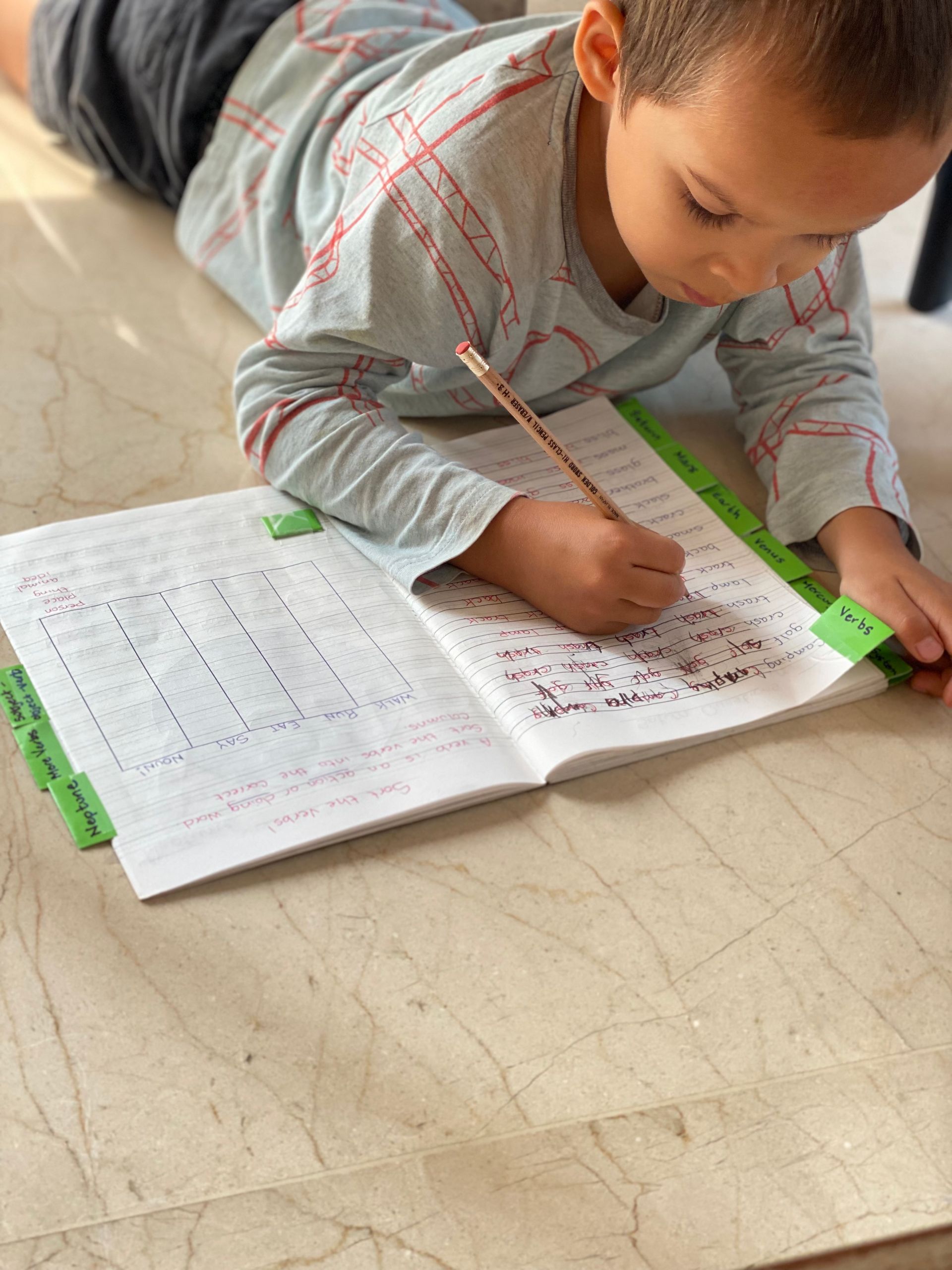
Feedback density is the number of corrections, suggestions, and targeted comments a teacher can give each student per session. In writing, it is the difference between reading every sentence a child writes and skimming a paragraph. In speaking, it is the difference between correcting a grammar error in the moment and letting it pass because there are nineteen other hands up.
In a class of 20, a teacher might give each child two or three meaningful corrections per session. In a class of 6, that number rises to ten or fifteen. Over a school year of 80 sessions, the difference compounds dramatically: roughly 200 corrections in a large class versus 1,000 in a small one. This is not a subtle pedagogical nuance. It is a five-times difference in the volume of targeted feedback a child receives.
Error Correction Timing
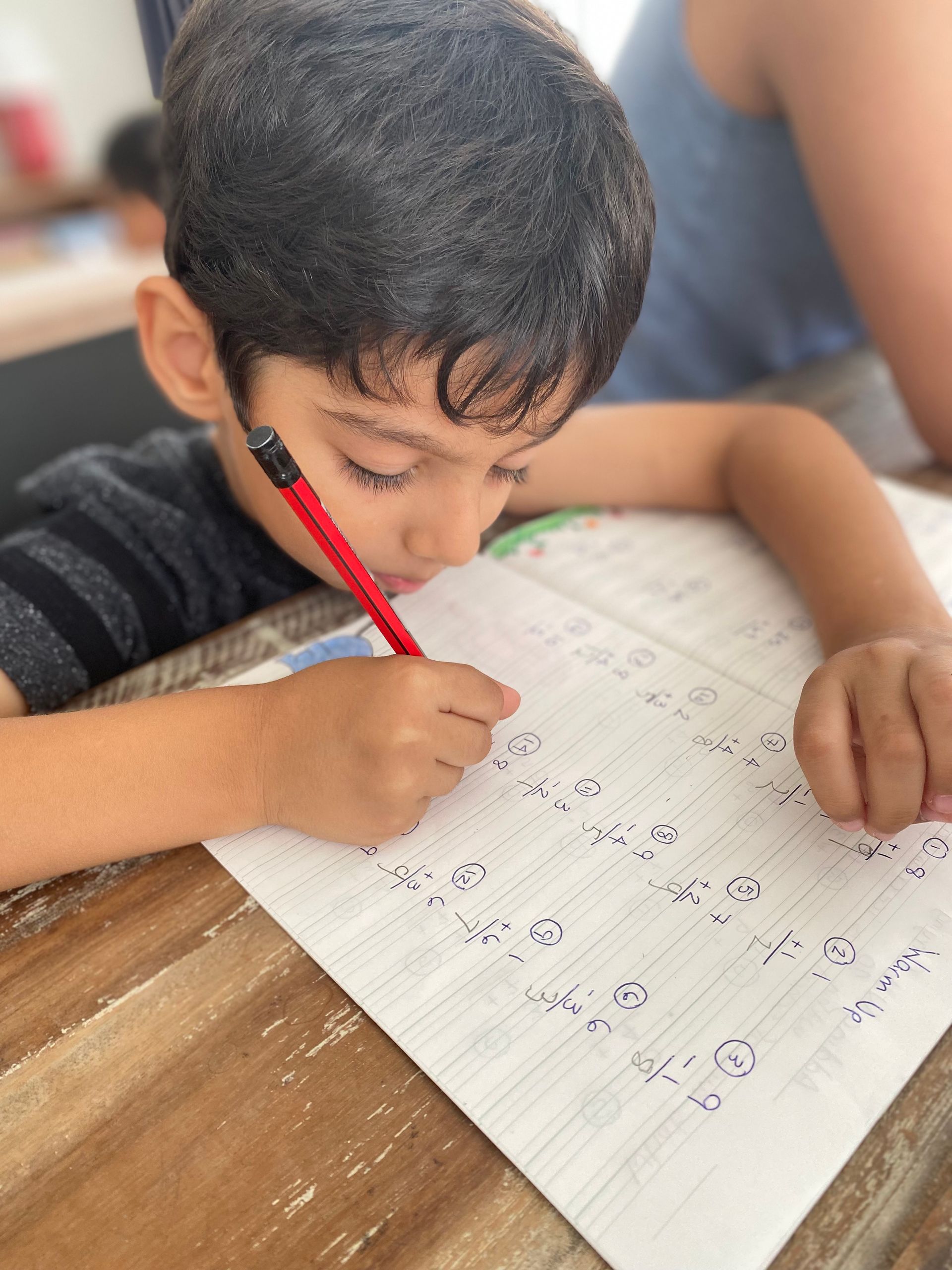
There is a window in language learning called the "correction window." When a child makes an error, the most effective correction happens within seconds, while the child still remembers what they said and why. In a large class, errors pass uncorrected because the teacher is attending to someone else. In a small class, the teacher catches the error in the moment, corrects it, and the child integrates the correction immediately.
This matters more than parents typically realize. Uncorrected errors become habits. A child who says "I have been to there" three hundred times without correction will find it significantly harder to unlearn than a child who was corrected the first or second time. Small classes are not just more pleasant. They are structurally different in how they handle the mechanics of language acquisition.
What The Research Actually Says
Parents deserve to know that the research on class size is more nuanced than either side of the debate typically presents. The honest summary is this: reducing class size from 25 to 20 produces small, inconsistent effects. Reducing class size from 15 to 8, or from 8 to 4, produces meaningful and consistent effects, particularly for younger children and children from non-English-speaking backgrounds.
The
STAR
Study
The most cited class-size research is the Tennessee STAR study (Student/Teacher Achievement Ratio), conducted across 79 schools from 1985 to 1989. It compared classes of 13 to 17 students (small) against classes of 22 to 25 students (regular). The findings showed statistically significant improvements in reading for students in smaller classes, with the strongest effects in the early grades and among minority and low-income students. The gains persisted into later years even after students returned to regular-sized classes.
The STAR study is important but has a limitation for our context: its "small" classes were 13 to 17 students, which is still larger than what specialist English centers offer. The study tells us that reducing class size matters. It does not tell us much about what happens below 10 students, which is where the most interesting effects for language learning occur.
Language learning benefits disproportionately from small classes compared to other subjects. This is because language acquisition requires production and feedback, not just comprehension. Several studies in the second language acquisition literature have documented this.
The relationship between class size and oral participation is not linear. It follows a threshold pattern. Below about 8 students, every child speaks in every session. Between 8 and 15, participation drops to roughly half the class. Above 15, a small number of confident students dominate and the rest are effectively silent. For English as a second or additional language, where oral production is essential to progress, this threshold effect means that classes above 8 students are structurally limiting for the quieter half of the room.
Writing feedback follows a similar pattern. A teacher can read and provide detailed feedback on writing from 6 students in a 90-minute session. They cannot do the same for 15. At best, they skim. The child receives a tick or a grade, not the sentence-level correction that drives improvement.
The
Language-Specific
Research
The Honest Caveats
The research also shows that class size alone is not sufficient. A small class with a poor teacher does not outperform a large class with an excellent teacher. Class size sets the ceiling; teacher quality determines where within that ceiling the outcomes fall. This is why Spark combines small class size with specialist teaching. Neither alone is enough.
There is also a floor below which smaller classes stop adding value for typical learners. One-on-one instruction removes the peer dynamic that helps children acquire language through interaction, modeling, and social motivation. A child alone with a teacher does not hear other children making and correcting mistakes, does not practice the turn-taking and listening that group communication requires, and does not benefit from the "eavesdropping effect" where they learn from corrections given to a peer. The research on language learning in particular suggests that 3 to 6 students is the range where both individual attention and peer dynamics are fully present.
The Six-Student Threshold
Why Spark Chose Six
The number six is not arbitrary. It is the result of a specific set of structural requirements that we believe are non-negotiable for effective English language instruction.
At six students, a teacher can hear every child read aloud in every session. This matters for phonics, for reading comprehension, and for identifying decoding errors that a child might mask in a larger group by mumbling or staying silent.
At six students, a teacher can read every piece of writing carefully and provide detailed, sentence-level feedback. Not "good work" or a grade, but specific comments: "This sentence needs a conjunction," "Your vocabulary here is strong but the tense is wrong," "Try restructuring this paragraph with the topic sentence first."
At six students, a teacher can correct speaking errors in real time, in the correction window, without losing the attention of the rest of the group. Beyond six, the teacher begins to choose between correcting the speaker and managing the group. That choice is the structural moment where large-class teaching diverges from small-class teaching.
At six students, diagnostic grouping works. The teacher can hold in mind the specific profile of each child: where they are strong, where they are weak, what they need next. Beyond six, the profiles begin to blur and teaching shifts from individual responsiveness to group management.
At six students, shy or anxious children participate. The social pressure of a larger group keeps many children silent. In a group of six, the social dynamic shifts from "audience and performers" to "conversation among peers." This is particularly important for children who are already anxious about their English.
We have experimented with groups of eight and found that the quality of feedback begins to degrade. We have worked with groups of four and found that the peer dynamic is thinner. Six is the number where both individual feedback and group dynamics are fully present. It is not the cheapest structure to deliver. It is the most effective one.
What This Means For Parents Comparing English Centers
When you ask an English center "what is your class size," listen carefully to the answer. There are three common patterns in HCMC.
The large chains (ILA, Apollo, VUS, British Council, Wall Street English) typically run classes of 8 to 15 students. Some advertise "small classes" and mean 10 to 12. These class sizes are effective for general English exposure and conversation practice, but they structurally limit the individual feedback, error correction, and speaking time that academic English requires.
Specialist centers vary. Some cap at 6. Some cap at 8. Some advertise "small groups" without specifying a number. Ask for the maximum, not the average. A center that says "our average class size is 6" may have some classes of 10 and some of 3. The maximum tells you the worst case your child will experience.
Private one-on-one tutors give maximum individual attention but zero peer dynamic. For language learning specifically, this trade-off is real.
FAQs
Frequently asked questions about class size and English learning
Q: Does class size really matter that much, or is teacher quality more important?
A: Both matter, but they interact. A great teacher in a class of 20 is constrained by the math: they cannot give each child enough speaking time, writing feedback, or real-time correction. A mediocre teacher in a class of 6 still gives more individual attention than most teachers can in a class of 20. The ideal is a great teacher in a small class. Class size sets the ceiling; teacher quality determines how close you get to it.
Q: My child is at ILA and seems to enjoy it. Should I switch to a smaller class?
A: Not necessarily. If your child is making the progress you expected and the goals are conversational rather than academic, a chain center may be the right fit. The class size question becomes critical when your child needs targeted academic English development, structured writing improvement, or IELTS preparation where every error corrected matters.
Q: Is one-on-one tutoring better than a small group?
A: For language learning, usually not. One-on-one removes the peer dynamic that is particularly important for language acquisition: hearing other children speak, practicing turn-taking, learning from peers' mistakes, and the social motivation of a small group. One-on-one is valuable for very specific needs (dyslexia support, advanced acceleration, short-term exam coaching), but for ongoing English development, a small group of 4 to 6 is structurally stronger.
Q: What does "small class" mean at Spark?
A: Maximum six students. This is a hard cap, not an average. We do not add a seventh student to an existing class. If a class is full at six, we open a new group or place the child on a waitlist until a suitable group forms.
Q: Why not cap at four instead of six?
A: Groups of four work well but produce a thinner peer dynamic. With four students, the conversational range narrows and the interaction patterns become less varied. Six gives enough social complexity for genuine group communication while still allowing full individual attention.
Q: My child is shy. Will a small group help or make things worse?
A: Almost always better. Shy children in large classes often go silent because the social risk of speaking in front of 15 or 20 peers is too high. In a group of six, the dynamic is conversational rather than performative. Shy children begin speaking within weeks, often surprising their parents.
Q: How does class size affect IELTS preparation specifically?
A: IELTS requires precision in writing and fluency in speaking, both of which depend on high-frequency error correction and extensive practice. In a class of 15, a student might write one practice essay per session and receive general feedback. In a class of six, they write the same essay and receive sentence-level correction across grammar, vocabulary, coherence, and task achievement. This is one of the reasons over 95% of Joe Evans' IELTS students at Spark achieve Band 7.5 or higher.
Ready For The Next Step?
If class size is important to your child's English progress, and if you want to see the difference that a maximum of six students per class actually makes, the most useful next step is a free assessment at Spark. We will show you exactly where your child is, what they need, and how our small-group structure addresses those needs specifically.
Book your free assessment at sparkvn.com/Assessment