TOP 5 PHONICS-BASED ENGLISH CENTERS IN HO CHI MINH CITY
Why Phonics Matters More Than Most Parents Realize
Your child can't read.
Or reads slowly. Or guesses at words. Or memorizes whole words but can't decode new ones.
You search for solutions in HCMC and find dozens of "English centers."
Most won't fix the problem.
Why? Because most teach English as a general subject, not as a systematic literacy skill.
The solution requires phonics-based instruction.
Decades of research prove systematic phonics is the most effective way to teach reading. Yet finding quality phonics programs in HCMC is harder than it should be.
This guide reveals the top 5 phonics-based English centers in HCMC and what makes quality phonics instruction different from generic English classes.
What Is Phonics-Based Instruction?
Phonics teaches the relationship between letters (graphemes) and sounds (phonemes).
Systematic phonics instruction:
- Teaches sound-letter relationships in logical sequence
- Provides explicit, direct instruction (not "discovery" learning)
- Includes intensive practice to build automaticity
- Uses decodable texts matched to taught patterns
- Builds from simple (CVC words) to complex (multisyllabic)
The result: Students decode any word systematically, not just memorized ones.
Without phonics:
- Students memorize whole words (limited capacity)
- Struggle with unfamiliar words
- Guess from context (often wrong)
- Spelling remains chaotic
- Reading speed plateaus
With systematic phonics:
- Students decode any word using patterns
- Reading fluency develops
- Spelling improves dramatically
- Foundation for all literacy
- Skills transfer across subjects
What Makes Quality Phonics Instruction?
Before evaluating centers, understand the criteria:
✅
Systematic sequence (not random pattern teaching)
✅
Explicit direct instruction (not "figure it out")
✅
Sufficient practice (100+ words per pattern)
✅
Decodable readers (texts using only taught patterns)
✅
Small group format (high feedback density)
✅
Diagnostic assessment (identify specific gaps)
✅
Progress monitoring (measurable outcomes)
✅
Trained instructors (specialized in literacy)
Many centers claim "phonics" but lack these elements. Generic English classes mentioning phonics aren't the same as systematic phonics instruction.
With these criteria, here are HCMC's top 5 phonics-based centers.
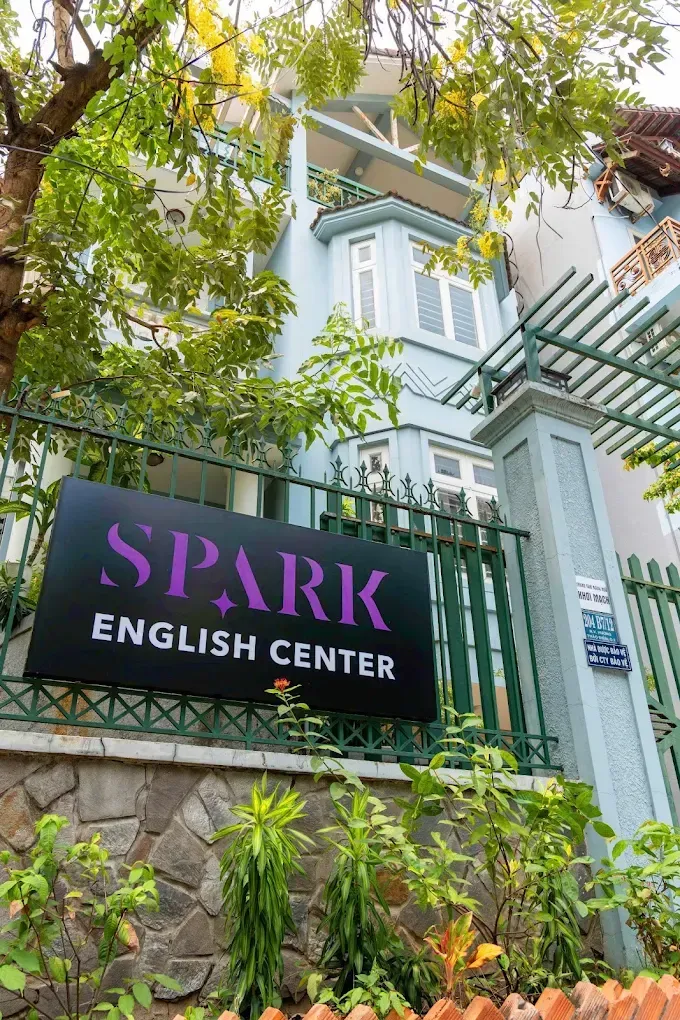
1. Spark English Center Vietnam — Best for Systematic Phonics Intervention
Location: Thao Dien, District 2
Class Size: Maximum 6 students
Specialization: Systematic phonics, reading fluency, literacy intervention
Best For: Students with phonics gaps affecting reading
Why Spark Leads HCMC in Phonics
Spark is the only English center in HCMC focused exclusively on evidence-based literacy intervention, including systematic phonics. While other centers offer phonics as one component, Spark builds entire programs around phonics-first methodology.
Spark's Phonics Approach
Diagnostic-First
Every student begins with a comprehensive 45-60 minute assessment measuring:
- Phonics patterns mastered (CVC, blends, digraphs, vowel teams, etc.)
- Phonics patterns missing
- Reading fluency (WPM and accuracy)
- Comprehension levels
- Decoding strategies in use
Result: Specific list of phonics gaps to address. No generic instruction.
Systematic Sequence
Spark follows research-validated phonics progression:
Level 1: Foundation Phonics
- Letter-sound correspondence
- CVC words (cat, dog, sun)
- Beginning sight words
- Blending and segmenting sounds
Level 2: Intermediate Phonics
- Consonant blends (bl, st, str)
- Digraphs (sh, ch, th, wh)
- Long vowels (silent e, magic e)
- Common vowel teams (ai, ee, oa)
Level 3: Advanced Phonics
- All vowel teams (igh, ay, ow, oi, oy)
- R-controlled vowels (ar, or, er, ir, ur)
- Silent letters (kn, wr, mb)
- Multisyllabic decoding strategies
Level 4: Mastery
- Morphology (prefixes, suffixes, roots)
- Greek and Latin patterns
- Word origins and complex spelling
- Application to academic vocabulary
Spark Phonics Programs
Phonics Intensive (4-8 weeks) For students with significant phonics gaps. Daily concentrated instruction. Rapid progress.
Phonics + Fluency Combined (10-14 weeks) For students needing both phonics and reading fluency development. Most popular program.
Comprehensive Literacy with Phonics Foundation (16+ weeks) For students with multiple gaps. Phonics is integrated with all literacy skills.
What Sets Spark Apart
✅
Maximum 6 students (true small groups)
✅
20-25 corrective feedback moments per child per lesson
✅
Decodable readers matched to taught patterns
✅
Trained literacy specialists (not just English teachers)
✅
Weekly progress monitoring with WPM tracking
✅
Parent coaching for home practice
✅
Free comprehensive assessment
✅
Located in the heart of the international school families area
Real Phonics Results
Documented student outcomes:
- 95% master target phonics patterns within program duration
- Reading fluency improvements of 25-50 WPM
- Comprehension gains of 20-30 percentage points
- Spelling accuracy dramatically improves
- Confidence transformation universal
Investment
- Phonics Intensive (4-8 weeks): 12-18 million VND
- Combined programs (10-14 weeks): 18-24 million VND
- Comprehensive (16+ weeks): 24-32 million VND
Best For
✅ Students who can't decode unfamiliar words
✅ Children reading below grade level
✅ International school students with phonics gaps
✅ Students who memorize words but can't analyze them
✅ Children with poor spelling despite English study
✅ Korean, Japanese, and Vietnamese students are missing English phonics foundation
✅ Students returning from non-English education systems
Free phonics assessment: sparkvn.com/Assessment
2. ILA Vietnam — Phonics as Component of General Curriculum
Location: Multiple HCMC locations
Class Size: 12-16 students
Specialization: General English with phonics elements
Best For: Younger students wanting general English with some phonics exposure
Overview
ILA includes phonics teaching within its general English curriculum, particularly for younger students. The Cambridge framework includes systematic phonics elements at appropriate levels.
Strengths
✅ Native English-speaking teachers
✅ Established curriculum framework
✅ Multiple HCMC locations
✅ Cambridge progression
✅ Recognized brand
✅ Reasonable pricing
Considerations
⚠️ Phonics is one component, not a central focus
⚠️ Class sizes (12-16) limit individual feedback
⚠️ Less specialized phonics intervention
⚠️ Limited diagnostic assessment for phonics gaps
⚠️ Sequence may not match individual student needs
⚠️ Less effective for closing significant gaps
Best Use Case
Students want general English exposure with some phonics inclusion as part of the broader curriculum. Better for the Early Years Foundation than for closing established gaps.
Limitations for Phonics-Specific Needs
ILA's class sizes and general curriculum approach work for general English development, but lack the specialization needed for students with significant phonics gaps. The 12-16 student format prevents the high-feedback intervention required for rapid phonics mastery.
3. British Council Vietnam — Phonics in the Cambridge Framework
Location: District 1 main center, other locations
Class Size: 12-16 students
Specialization: Cambridge English with phonics components
Best For: Younger students in a structured Cambridge progression
Overview
British Council uses the Cambridge curriculum, which includes systematic phonics for younger learners. Quality teaching standards and an established framework.
Strengths
✅ Globally recognized methodology
✅ Cambridge phonics progression
✅ Quality teacher training
✅ Strong young learner programs
✅ Comprehensive resources
✅ Established reputation
Considerations
⚠️ Phonics integrated into broader curriculum
⚠️ Class sizes (12-16) limit personalization
⚠️ Limited diagnostic capability for phonics gaps
⚠️ Premium pricing
⚠️ Less suited for older students with phonics gaps
⚠️ Standardized progression
Best Use Case
Younger students starting structured English learning who benefit from Cambridge progression, including phonics components. Better for sequential development than gap remediation.
Limitations
For older students who missed phonics foundation, the British Council's standardized progression doesn't address specific gaps efficiently. Class sizes and general curriculum approaches are less effective for intensive intervention.
4. Apollo English — Structured Phonics in Multi-Level Programs
Location: Multiple HCMC locations
Class Size: 12-16 students
Specialization: Structured English with phonics at appropriate levels
Best For: Younger students in structured progression
Overview
Apollo English includes phonics teaching within its structured curriculum for young learners. Established quality systems and reliable delivery.
Strengths
✅ Established quality systems
✅ Multiple locations
✅ Native English-speaking teachers
✅ Cambridge alignment
✅ Various age-appropriate programs
✅ Reasonable pricing
Considerations
⚠️ Phonics not central focus (one of many elements)
⚠️ Class sizes are too large for intensive intervention
⚠️ Limited specialized phonics expertise
⚠️ Standardized programs are less adaptable
⚠️ Less effective for older students with gaps
Best Use Case
Families want a reliable, established English program with a structured curriculum that includes phonics at appropriate levels. Better for general progression than targeted intervention.
Limitations for Phonics Intervention
Apollo's general English focus and class sizes don't support intensive phonics remediation. Students with significant gaps need a more specialized approach.
5. Specialized Tutors and Smaller Centers
Location: Various HCMC locations
Class Size: Varies (1-on-1 to 4-6 students)
Specialization: Varies by tutor
Best For: Families seeking 1-on-1 attention or smaller specialized centers
Overview
HCMC has independent tutors and smaller specialized centers offering phonics-based instruction. Quality varies enormously based on tutor qualifications and methodology.
Strengths
✅ Smaller groups or 1-on-1
✅ Individualized attention
✅ Flexible scheduling
✅ Various pricing options
✅ Some highly qualified specialists available
✅ Personal relationships possible
Considerations
⚠️ Quality varies dramatically
⚠️ Difficult to verify qualifications
⚠️ Some "phonics tutors" lack a systematic methodology
⚠️ Limited diagnostic capability typically
⚠️ Progress monitoring inconsistent
⚠️ No standardized curriculum
⚠️ Often expensive 1-on-1 (800K-1.2M VND/hour)
How to Evaluate Independent Tutors
Ask these questions:
- What systematic phonics curriculum do you follow?
- How do you assess specific phonics gaps?
- What decodable readers do you use?
- How do you measure progress?
- What's your training in literacy intervention?
- Can you provide before/after data on previous students?
Red flags:
❌ Vague answers about methodology
❌ "I just teach what they need"
❌ No specific curriculum
❌ Random pattern teaching
❌ No assessment process
❌ "Native speaker" as primary qualification
Best Use Case
Specific 1-on-1 needs that small groups can't address, or specialized tutors with verified credentials and systematic methodology.
Limitations
Without verifiable qualifications and systematic methodology, results vary dramatically. Many "phonics tutors" provide what amounts to homework help, not systematic instruction.
Comparison Matrix: Phonics Quality Across Centers
Spark English Center Vietnam | ⭐⭐⭐⭐⭐ Core instructional focus | Maximum 6 students | Free comprehensive assessment | Structured and sequential | Fully aligned to phonics progression | Weekly tracking and feedback
ILA | ⭐⭐⭐ Included as one component | 12–16 students | Limited screening | General English sequence | Generic reading materials | Periodic progress checks
British Council | ⭐⭐⭐ Cambridge-integrated phonics exposure | 12–16 students | Limited placement testing | Cambridge-based sequence | Mixed reading materials | Periodic reporting
Apollo English | ⭐⭐⭐ Included within broader curriculum | 12–16 students | Limited screening | General progression model | Generic reading materials | Periodic monitoring
Private Tutors | Varies significantly | 1–6 students | Depends on tutor | Often inconsistent | Varies | Varies
What Quality Phonics Instruction Looks Like
Sample Spark phonics lesson (45 minutes):
Minutes 1-5: Warm-up Review
- Quick review of previously taught patterns
- Flashcard drills
- Each student responds multiple times
- Fast pace, high engagement
Minutes 6-15: New Pattern Introduction
- Teacher explicitly teaches new pattern (e.g., "igh")
- Models how letters work together
- Students practice with teacher guidance
- Multiple examples and applications
Minutes 16-30: Intensive Practice
- Reading words with a new pattern
- Decoding new words systematically
- Reading sentences with a pattern
- Reading a short decodable passage
- Each student reads aloud individually
- Immediate corrective feedback
Minutes 31-40: Application
- Writing words using a pattern
- Reading practice from a decodable book
- Partner practice with peer feedback
- Independent application
Minutes 41-45: Assessment and Goals
- Quick check of pattern mastery
- Goal setting for home practice
- Materials for daily practice
Throughout the lesson:
- 20-25 corrective feedback moments per student
- Multiple opportunities to practice
- Continuous monitoring of accuracy
- Adjustment based on student response
Compare this to a 12-16 student class:
Each student speaks 2-3 times per lesson. Receives 2-3 feedback moments. Practices significantly less. Progress slower.
The math: Small group phonics produces 8-10x more learning per lesson.
Why Spark's Phonics Approach Wins
1. Systematic Curriculum
Not random pattern teaching. Carefully sequenced from simple to complex. Builds on previous learning. No gaps left.
2. Explicit Direct Instruction
The teacher demonstrates clearly. Students don't have to "figure out" patterns. Faster mastery.
3. Sufficient Practice
100+ words per pattern. Multiple readings of decodable texts. Practice until automatic.
4. Decodable Texts
Books matched to taught patterns. Students can read independently with success. No frustration with unknown patterns.
5. Small Group High-Feedback
Maximum 6 students. 20-25 corrections per child per lesson. Compare to 2-3 in larger classes.
6. Diagnostic Targeting
Free assessment identifies exact gaps. Instruction targets specific needs. No wasted time.
7. Trained Specialists
Teachers are specifically trained in literacy intervention. Not just native speakers.
8. Progress Monitoring
Weekly fluency tracking. Pattern mastery checks. Data-driven adjustment.
9. Parent Partnership
Home practice routines provided. Materials aligned with lessons. Parents become effective practice partners.
10. Cultural Competence
Specialized experience with Korean, Japanese, and Vietnamese learners' phonics needs. Understanding of L1 interference patterns.
When Your Child Needs Phonics Intervention
Red flags suggesting phonics gaps:
✅ Reads slowly with frequent guessing
✅ Substitutes wrong words while reading
✅ Spelling is illogical or random
✅ Cannot read unfamiliar words
✅ Reading fluency below grade level
✅ Struggles with multisyllabic words
✅ Avoids reading aloud
✅ Comprehension is good when others read aloud, poor when reading alone
✅ Years of English study without strong reading skills
✅ Comes from a bilingual or non-English education background
If 3+ apply: Phonics assessment needed
Best step: Free diagnostic assessment to identify specific phonics gaps and recommended intervention.
Frequently Asked Questions
My child reads but slowly. Is that a phonics issue?
Possibly. Slow reading often indicates incomplete phonics knowledge, limiting decoding automaticity. Diagnostic assessment determines if phonics or other factors are causing slowness.
How long does phonics intervention take?
Most students close significant phonics gaps in 8-12 weeks of intensive small-group instruction. More extensive gaps may require 16+ weeks. Spark's free assessment provides a realistic timeline.
My child is in Grade 5. Is it too late for phonics?
No. Phonics intervention works at any age. Older students often progress faster due to cognitive maturity. We work with students through Grade 8 and beyond on phonics.
Will school assignments help fix phonics gaps?
Usually not. Schools assume a phonics foundation. Generic reading practice doesn't systematically address specific phonics gaps. Targeted intervention needed.
What about phonics apps?
Apps can supplement but not replace human instruction for significant gaps. The student needs immediate corrective feedback that apps can't provide. Apps work better for review than for initial mastery.
Can my child do phonics during the summer?
Yes. Summer is ideal for intensive phonics work. No school distractions. Concentrated focus produces results in 4-8 weeks. See Spark Summer programs.
How is Spark different from regular tutoring?
Spark uses a systematic, evidence-based phonics curriculum in small groups (max 6) with literacy-trained specialists. Generic tutoring lacks a systematic approach, training, and small-group benefits.
Is phonics needed for older students preparing for IELTS?
Indirectly, yes. Phonics gaps slow reading, affecting reading comprehension test scores. Older students with phonics gaps benefit from foundation work before IELTS-specific preparation.
Will phonics help my child's spelling?
Dramatically. Phonics is the foundation of spelling. Most spelling problems stem from phonics gaps. Phonics intervention typically produces significant spelling improvement.
Can my Vietnamese-medium school child learn English phonics at Spark?
Yes. Many Vinschool, EMASI, and Vietnamese public school students attend Spark for English phonics specifically. Vietnamese provides a good base for English phonics learning.
How to Get Started
Step 1: Free Diagnostic Assessment
Identifies your child's specific phonics gaps:
- Which patterns mastered
- Which patterns missing
- Reading fluency level
- Decoding strategies
- Recommended intervention
45-60 minutes. Detailed report. Zero cost.
Step 2: Review Results with Spark Team
Understand specific gaps. See a realistic timeline. Get program recommendation.
Step 3: Choose the right program
- Phonics Intensive (4-8 weeks)
- Combined Phonics + Fluency (10-14 weeks)
- Comprehensive Literacy (16+ weeks)
Step 4: Begin Targeted Intervention
Small groups (max 6). Systematic instruction. Immediate feedback. Measurable progress.
Step 5: Watch Transformation
Reading improves. Confidence grows. Spelling solidifies. Foundation set for academic success.
Take Action: Get the Right Phonics Foundation
If your child struggles with reading, fix the foundation first.
Free Phonics Assessment at Spark English Center Vietnam:
- 45-60 min individual evaluation
- Specific phonics patterns tested
- Reading fluency measurement
- Detailed gap analysis
- Personalized intervention plan
- Parent consultation
- Zero cost, zero obligation
Book Now: https://www.sparkvn.com/Assessment
Contact:
- Phone: 0398143487
- Email: sparkalcvn@gmail.com
- Location: 204B7/12 Nguyen Van Huong, Thao Dien, HCMC
Hours:
- Mon-Fri: 8 am-7:30 pm
- Sat: 8 am-5 pm
Final Recommendation
For students needing intensive, systematic phonics intervention: Spark English Center Vietnam.
Specialized expertise. Small groups. Diagnostic-driven. Evidence-based methods. Measurable results.
For younger students wanting Cambridge phonics within general English: ILA, British Council, Apollo.
Established providers, structured curriculum, and broader English development.
For specific 1-on-1 needs: Verified specialized tutors.
A small percentage of tutors offer quality systematic phonics. Verify carefully.
The right choice depends on your child's specific situation.
For most students with measurable reading struggles, Spark's specialized phonics intervention produces the fastest, most reliable results.
Free assessment reveals the right path forward.
Don't let phonics gaps limit your child's reading future.
Book your assessment today.
Related Reading:
- Why Phonics-Based Learning Works Best
- Reading Fluency Blueprint
- Best English Centers for International Students
- International School Success Guide
External Resources:
Spark English Center Vietnam | Thao Dien, HCMC | HCMC's Specialist for Systematic Phonics Instruction | Evidence-Based Methods, Measurable Results
Disclaimer: Information about other centers is based on publicly available data as of early 2026. Programs and specifics may vary. Verify current offerings directly with each center. Spark assessment provides an accurate current evaluation of your child's specific needs.